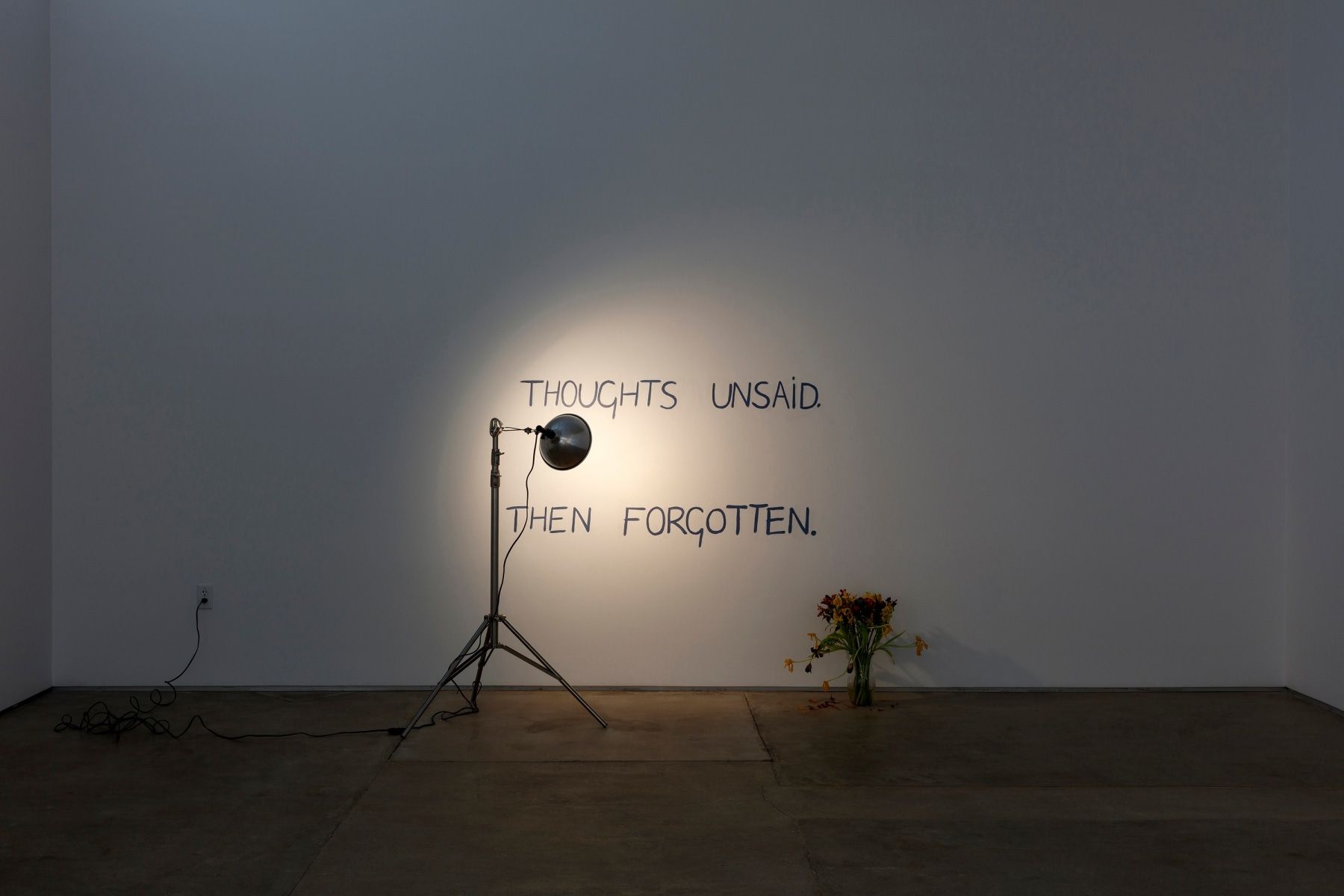
Spatial
Spatial introduces the conceptual vocabulary that underpins the subsequent sections—Counter-Urbanism, Territorial Reclamation, and Entropy—each elaborating how urban governance and tactics, territorial strategies, and energetic methods translate the spatial thesis into concrete interventions.
Spatial
“I would like there to exist spaces that are stable, unmoving, intangible, untouched and almost untouchable, unchanging, deep-rooted; places that might be points of reference, of departure, of origin: my birthpalce, the cradle of my family, the house where I may have been born, the tree I may have seen grow (that my father may have planted the day I was born), the attic of my childhood filled with intact memories
Such places don’t exist, and it’s because they do’nt exist that space becomes a question, ceases to be self-evident, ceases to be incorporated, ceases to be appropriated. Space is a doubt: I have constantly to mark it, to designate it, It is never mine, never given to me, I have to conquer it.
My spaces are fragile: time is going to wear them away, to destroy them. Nothing will any longer reseble waht was, my memories will betray me, oblivion will infiltrate my memory, I shall look at a few old yellowing photographs with broken edges without recognising them.
The words ‘Phone directory available within’ or ‘Snacks served at any hour’ will no longer be written up in a semi-circle in white porcelain letter on the window of the little café in the Rue Coquillière.
Space melts like sand running through one’s fingers. Time bears it away and leaves me only Shapeless shreds: to write: to try meticulously to retain something, to cause something to survive; to wrest a few precise scraps from the void as it grows, to leave somewhere a furrow, a trace, a mark or a few signs.
Paris 1973-1974”
― Georges Perec, Species of Spaces and Other Pieces
SP.E.C.TR.E. is concerned with space. It uses philosophical, artistic, cinematic, textual, and curatorial practices to challenge and expand the notion of space, that is at once self-evident and elusive.
Bas Jan Ader’s ‘Thoughts Unsaid, Then Forgotten.’ functions here as a manifesto for a renewed idea of space. Space is first and foremost a thought. It is unsaid because a dimension of space—indeed, of spacetime—resists articulation: a pre-discursive stratum “before” space remains unsaid because it is unsayable. It is then forgotten because, in everyday life, space is habitually flattened into a purely quantitative extension, in a Cartesian register.
SP.E.C.TR.E. contests this reduction and approaches space as a set of relations—pliable, revisable, and open to transformation. In this relational view, space is not a neutral container but a dynamic configuration of forces, times, and practices. Space ceases to be self-evident and becomes a question. Space has to be constantly marked, designated, questioned and re-conceptualised.
Following Jean-Luc Godard’s invitation “to change nothing so that everything is different,” we work by reconfiguring relations—between words and spaces, objects and times—so that the whole can be transformed without adding physical objects. In this sense, architecture becomes an act of resistance to construction: a discipline concerned less with building than with altering relations and frames.