Entropy
Beyond Entropy is a curatorial–architectural agency that treats energy, entropy, and form as dialectical moments for theorizing, conceiving, and producing space—privileging relations over objects, processes over products, and ephemerality over permanence.
- AA Intermediate
- Beyond Entropy
- When Energy Becomes Form
- When Prototypes Become Space
- Beyond Entropy Angola
- Luanda Encyclopedic City
- Ilha de Sao Jorge
- From Hands To Mind
- Mangiabarche Gallery
- Mediter-Radio
- Il Quarto Stato
- Potential Monuments of Unrealised Futures
AA Intermediate
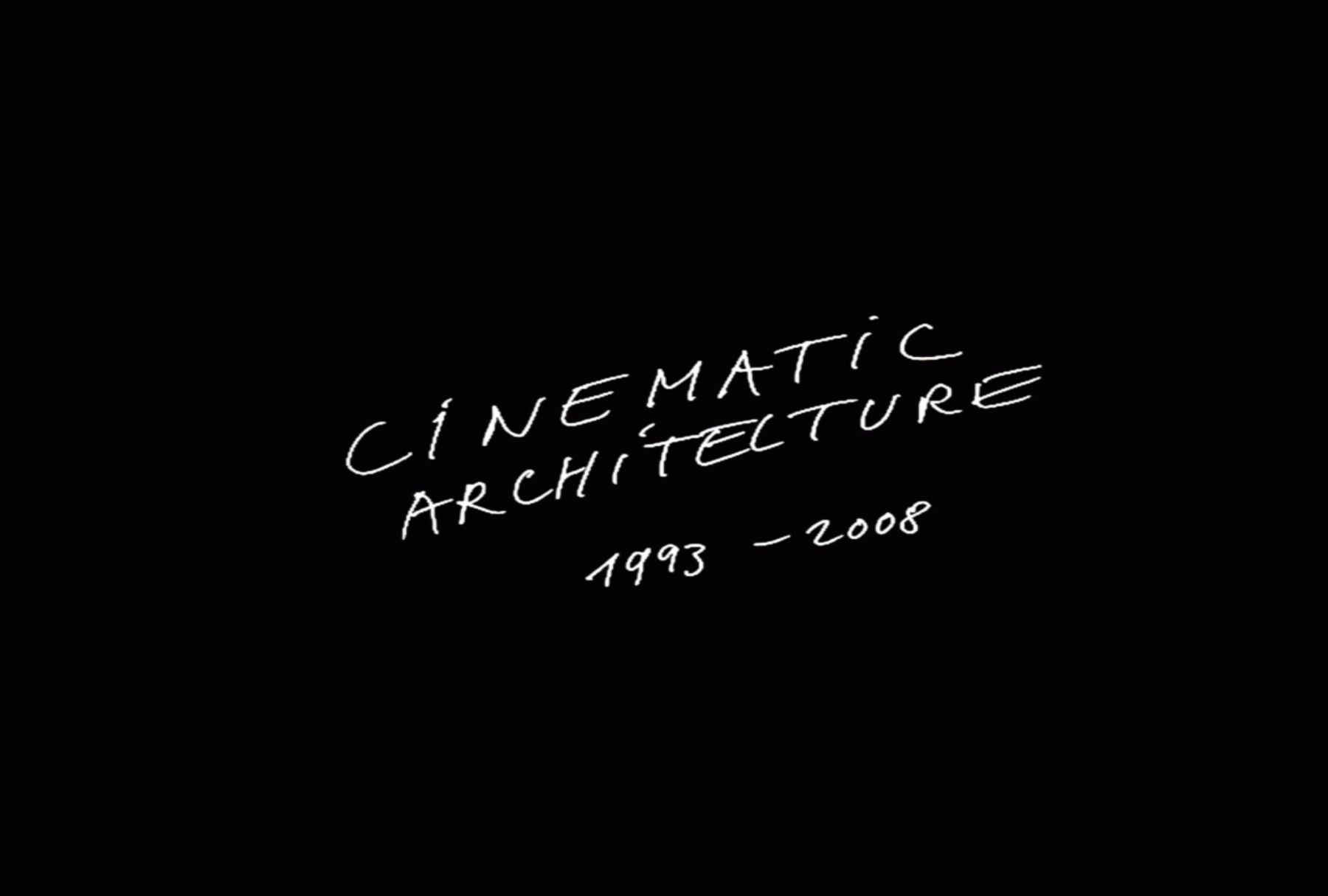
At the Architectural Association School of Architecture, Pascal Schöning’s Cinematic Architecture provided the intellectual ground for the subsequent work on Energy, Entropy and Form. In Schöning’s unit, cinema offered a way of approaching architecture through dematerialization, movement, duration and relation rather than as a physical, static object.
These questions were later developed through a series of academic years taught at the AA.
The first explored the idea of a trailer for a building that did not exist. Rather than designing the building and subsequently representing it, the project used the cinematic sequence to construct its possibility through images, movement and anticipation. The trailer became a means of producing an architectural experience without the building ever having to materialize.
The investigation then shifted from cinema to performance, and with it from representation to action. Architecture was no longer understood as a container within which an event takes place. Movement, gestures, bodies and events became active components of its production.
Cinema and performance thus opened a broader inquiry into the relationship between architecture, action and transformation. These questions were subsequently extended to physical and material processes, leading to the work on Energy, Entropy and Form.
Energy, Entropy and Form can therefore be understood as the continuation of a trajectory initiated at the Architectural Association: from cinema to performance, and from action to physical processes. Underlying these different stages is a consistent proposition: space does not precede dwelling; it is continuously produced and transformed through the act of dwelling itself.
Beyond Entropy
“Actually, the principle of the conservation of energy is mingled in every artist or technician with the search for happiness and death. In architecture this search is also undoubtedly bound up with the material and with energy. (…) In the use of every material there must be an anticipation of the construction of a place and its transformation. (…) I identified this precise problem with the relation between form and function: form persists and comes to preside over a built work in a world where functions continually become modified; and in form, material is modified. The material of a bell is transformed into a cannon ball; the form of an amphitheater into that of a city; the form of a city into a palace.”
— Aldo Rossi, A Scientific Autobiography
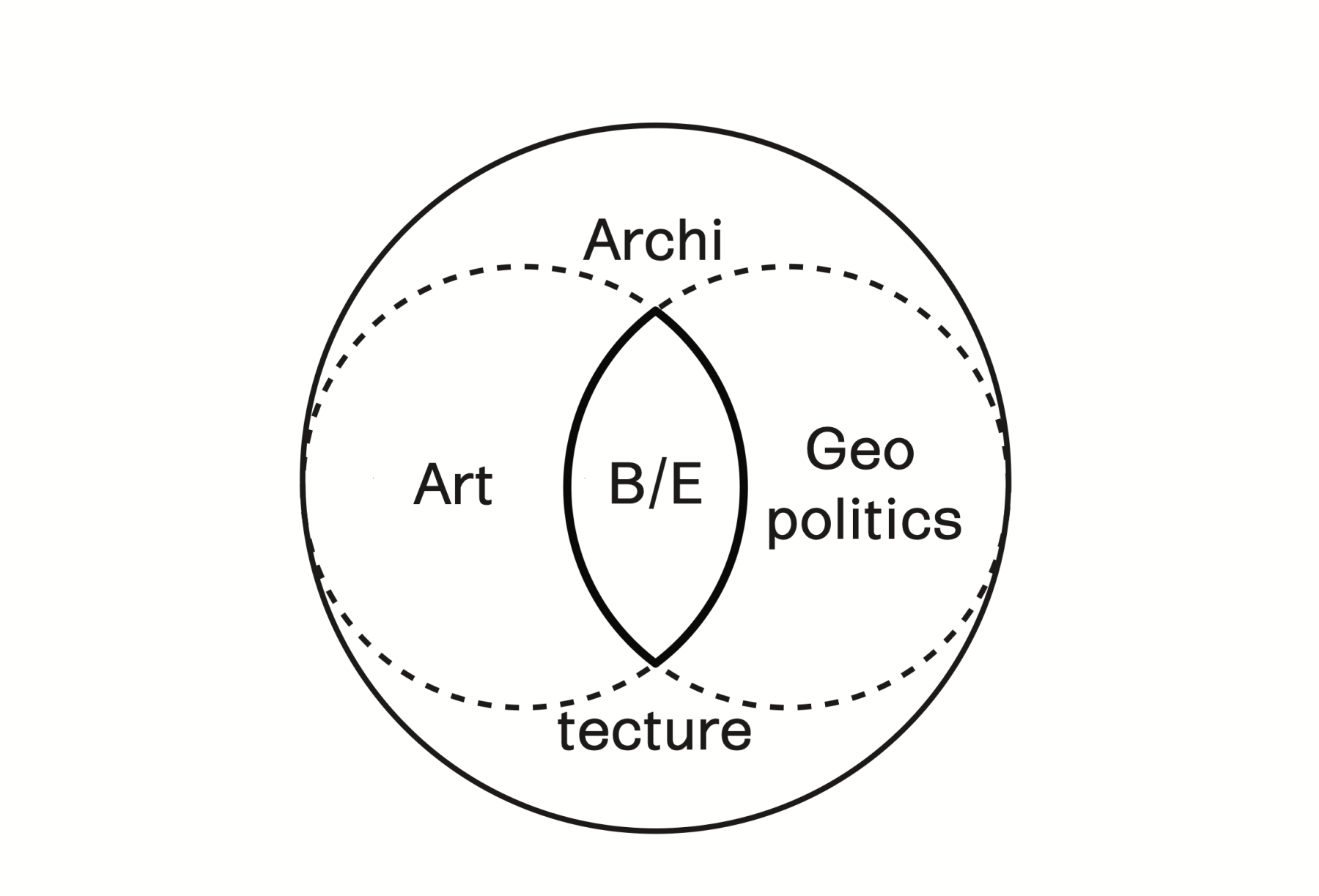
Beyond Entropy was an experimental practice operating across art, architecture, urbanism and geopolitics. At the centre of its research was a fundamental question: how does space exist in relation to time and transformation?
Rather than defining architecture through the production of physical objects, Beyond Entropy understood space as a configuration of forces and relationships, continuously modified by environmental, social, political, economic and cultural processes. Architecture became an act of resistance to construction: not necessarily rejecting building, but challenging the assumption that spatial transformation requires the production of new structures. Instead, architecture begins by recognising existing conditions and exploring how their relationships might be altered.
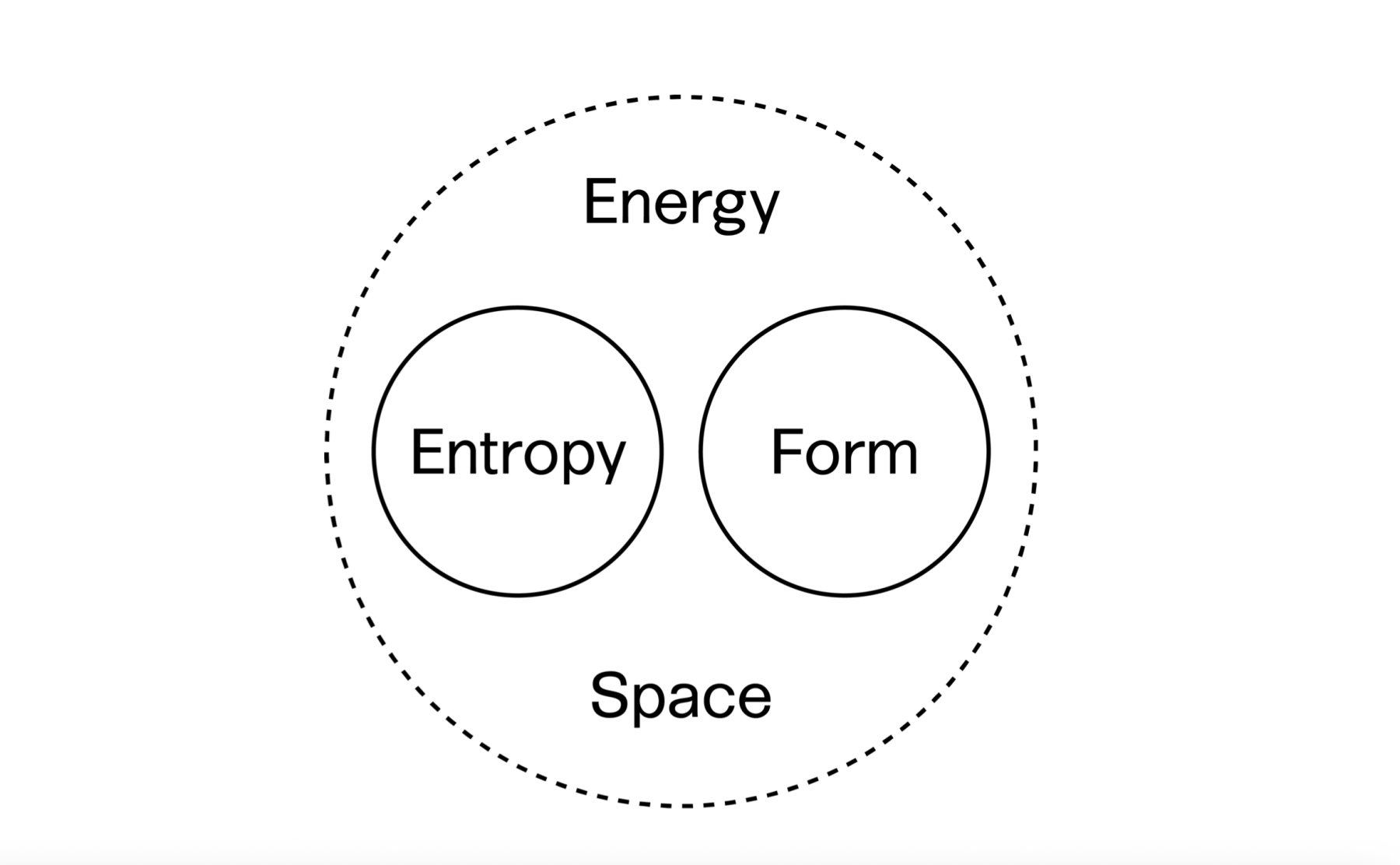
Beyond Entropy translated the concepts of energy, entropy and form into a spatial methodology. Energy identified forces and potentials; entropy described their irreversible evolution through time; form represented their temporary spatial configuration. Architecture could consequently address processes rather than objects, transformations rather than fixed states. Every spatial condition contained both the traces of its past and the possibilities of its future.
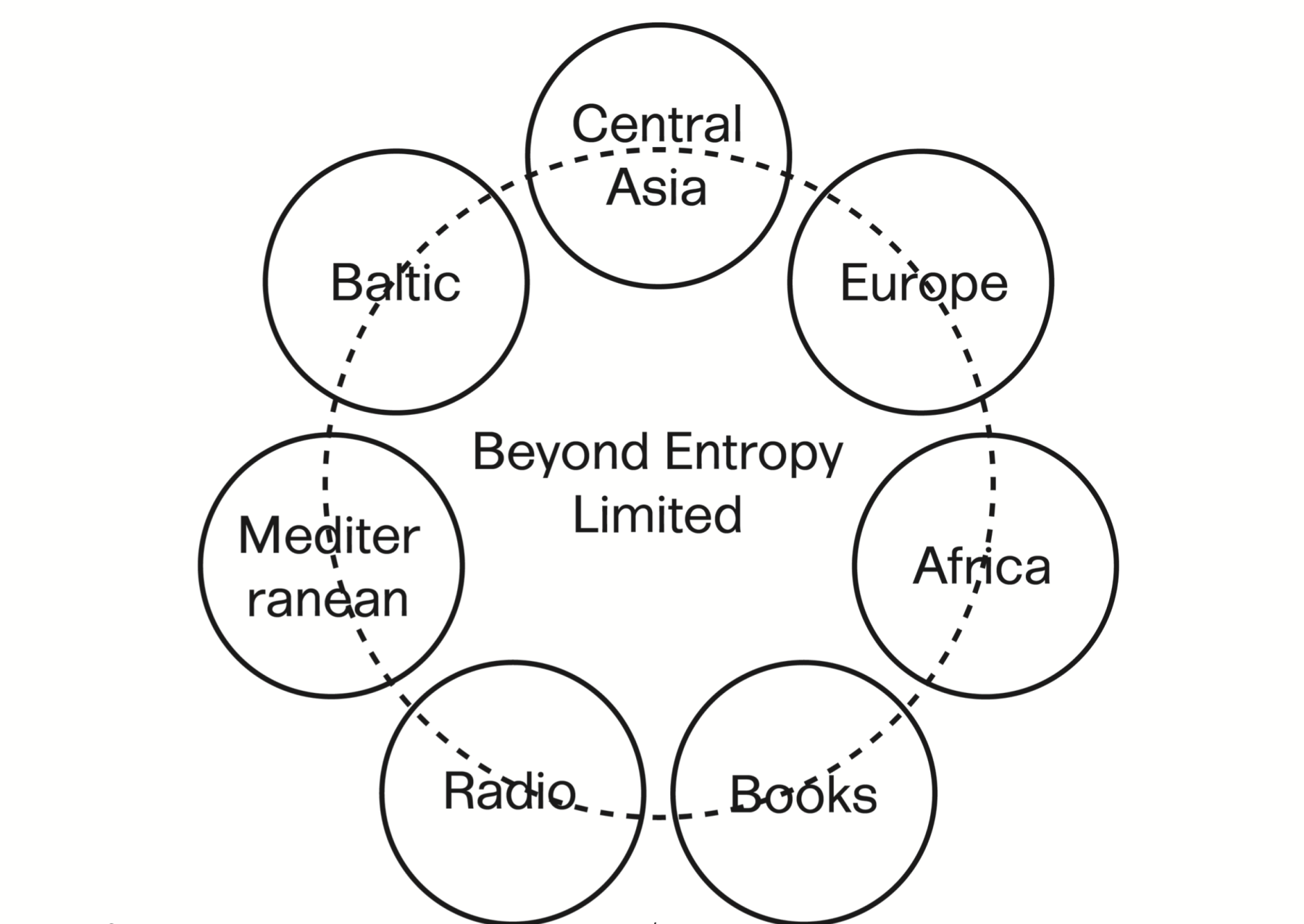
This methodology was progressively tested across African cities, Mediterranean coastlines and European urban territories. Despite their differences, these places shared a defining characteristic: they were territories of crisis, where conventional architectural and urban models had become incapable of affecting reality. Established distinctions between city and countryside, formal and informal development, natural and artificial environments, preservation and transformation were no longer sufficient.
Crisis therefore became the condition through which another spatial intelligence could emerge.
Rather than imposing an external order, Beyond Entropy investigated the latent energies within each territory. Buildings, landscapes, infrastructures, regulations, memories, economies and ecologies became the materials of architectural intervention. This approach was encapsulated in a recurring proposition: “Changing nothing so that everything is different.” A minimal displacement within an existing situation could reorganise its relationships and generate an entirely new spatial condition.
Through successive projects, Beyond Entropy progressively dissolved the boundaries between architectural and curator
When Energy Becomes Form
Beyond Entropy originated in 2009 at the Architectural Association School of Architecture in London as a transdisciplinary research platform entitled Beyond Entropy: When Energy Becomes Form. At a moment when architectural discourse increasingly equated energy with sustainability, efficiency and technological performance, Beyond Entropy proposed a different interpretation: energy was understood not simply as something to be conserved, consumed or measured, but as a conceptual model through which space itself could be reconsidered.
Aldo Rossi’s reflection on the conservation of energy provided an important conceptual point of departure. Buildings can be understood as frozen potential energy. Energy does not disappear: it changes state. It can remain latent within matter and reappear in another form. In the same way, form persists while functions change, and matter persists while form changes.
The question was therefore not only “what is space?”, but “how does transformation manifest itself through space?” And, more fundamentally: “how does energy become form?”
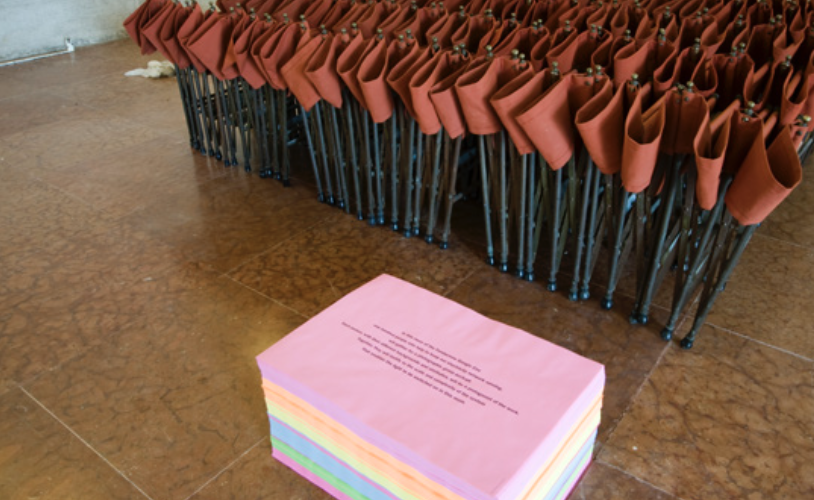
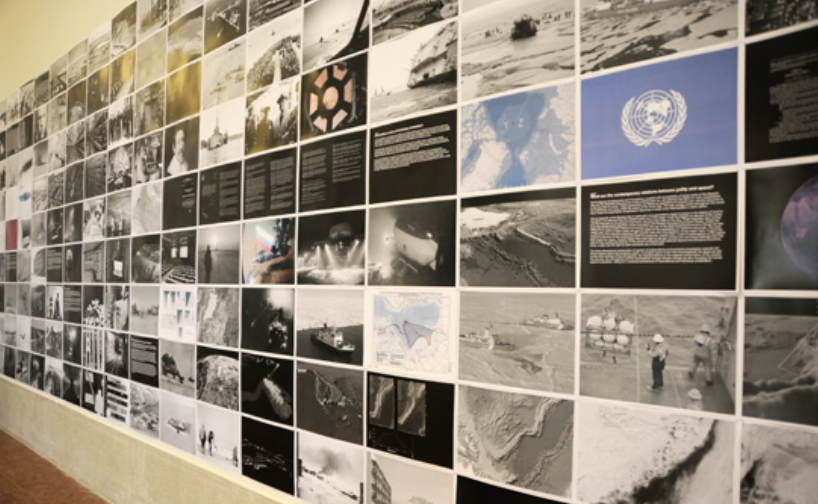
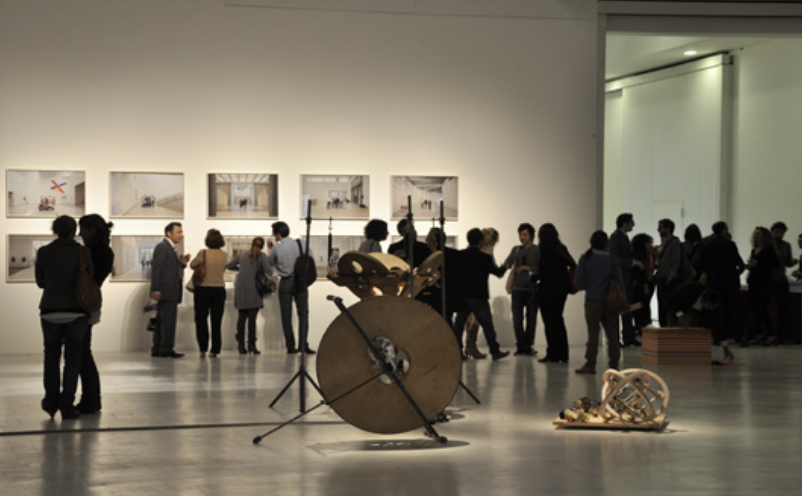
The first phase of the research, Beyond Entropy: When Energy Becomes Form, brought together artists, architects and scientists to investigate different forms of energy through experimental prototypes situated between artworks, architectural models and scientific experiments.
When Prototypes Become Space
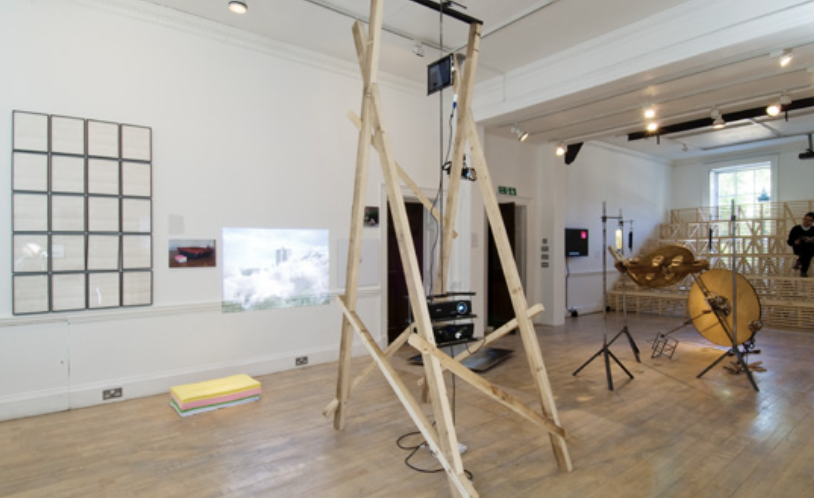
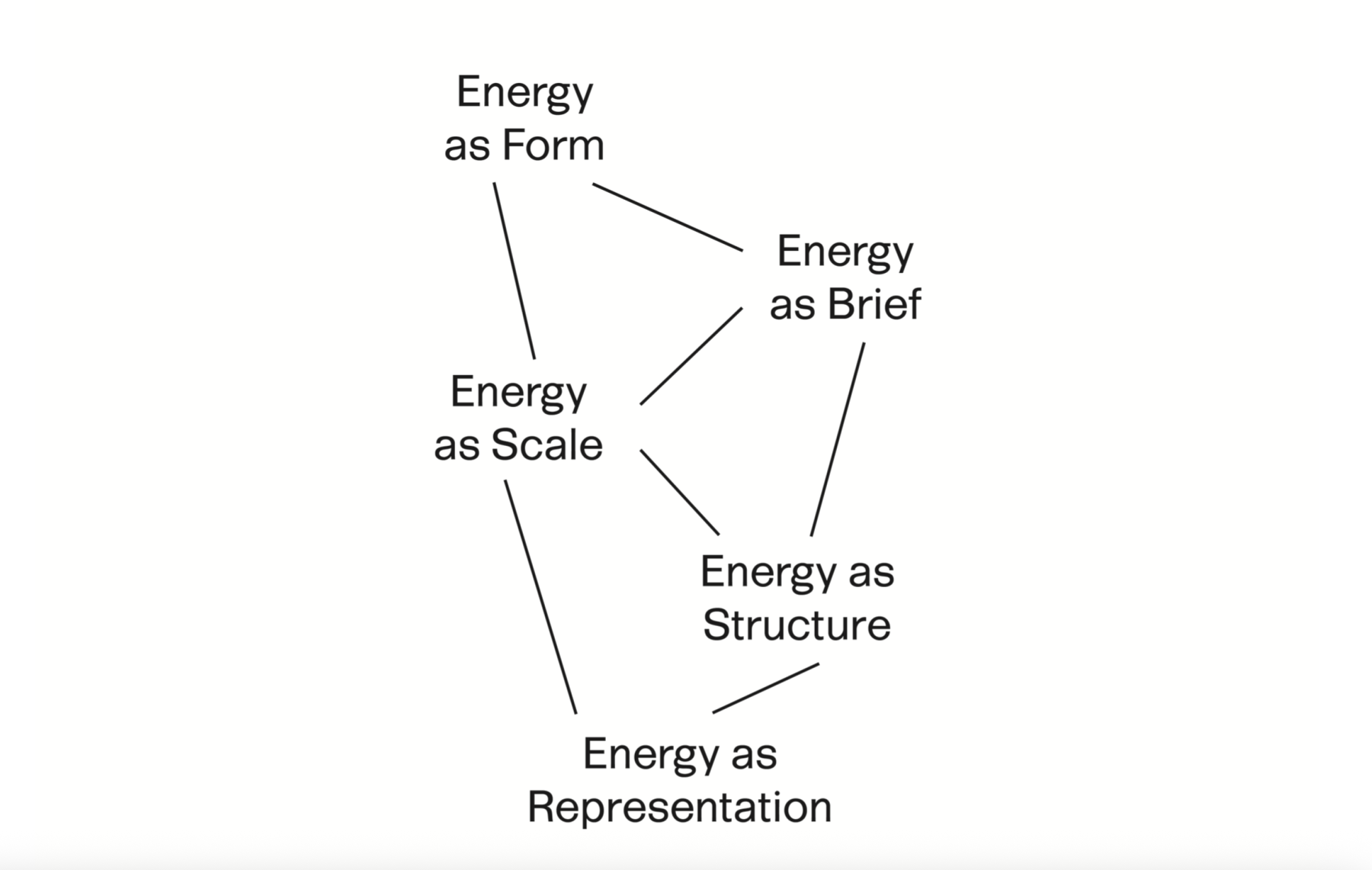
The research subsequently developed into Beyond Entropy: When Prototypes Become Space. The shift in title marked a transition from energy as a conceptual framework to the prototype as a spatial instrument: from identifying forces to testing how they could generate spatial conditions.
1. Brief — Programme can operate otherwise
The brief is not understood as a fixed set of functions to be accommodated, but as a field of possibilities. The prototype explores how a given programme might operate differently, allowing unforeseen uses, relationships, and forms of occupation to emerge.
2. Scale — The plasticity of scale
Scale is not fixed but plastic. It allows architecture to connect simultaneously the very large and the very small: territory and detail, geography and material, infrastructure and body. Scale becomes an instrument for establishing relationships between apparently incompatible dimensions.
3. Structure — Embracing forces rather than resisting them
Structure is conventionally conceived as a means of resisting gravity, movement, and external forces in order to maintain stability. Beyond Entropy reverses this principle. Structure can absorb and register movement. Rather than resisting change, it accommodates it.
4. Representation — The palimpsest of time
Architectural representation conventionally fixes space at a particular moment: a plan or section is a snapshot of a building at a given point in time. From an energetic perspective, representation instead becomes a palimpsest, capable of registering successive states and incorporating temporal development. Drawing no longer simply depicts an object; it records change over time.
5. Form — A dispositif for revealing latent forces
Form is not a final configuration imposed upon a space. It becomes a dispositif through which latent environmental, energetic, social, economic, and spatial dynamics become perceptible. Form does not impose order; it reveals what is already there.
Beyond Entropy Angola
Beyond Entropy Africa, established with Paula Nascimento, confronted this methodology with the rapidly transforming urban and territorial conditions of Angola and Portuguese-speaking Africa. Its research developed through three principal projects: Beyond Entropy Angola, Ilha de São Jorge and From Hands to Mind.
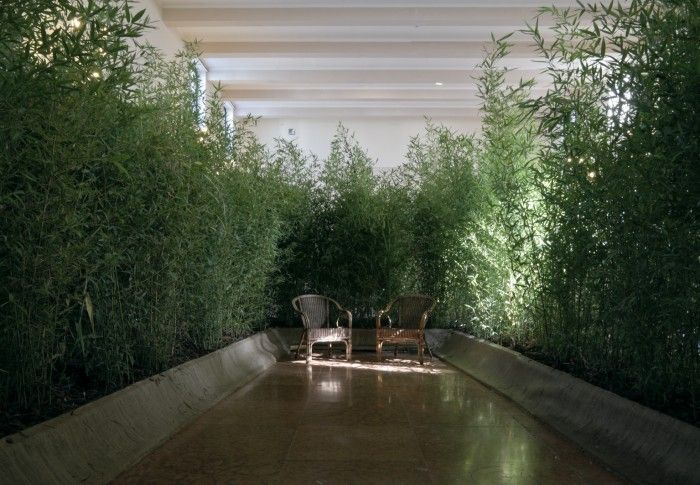
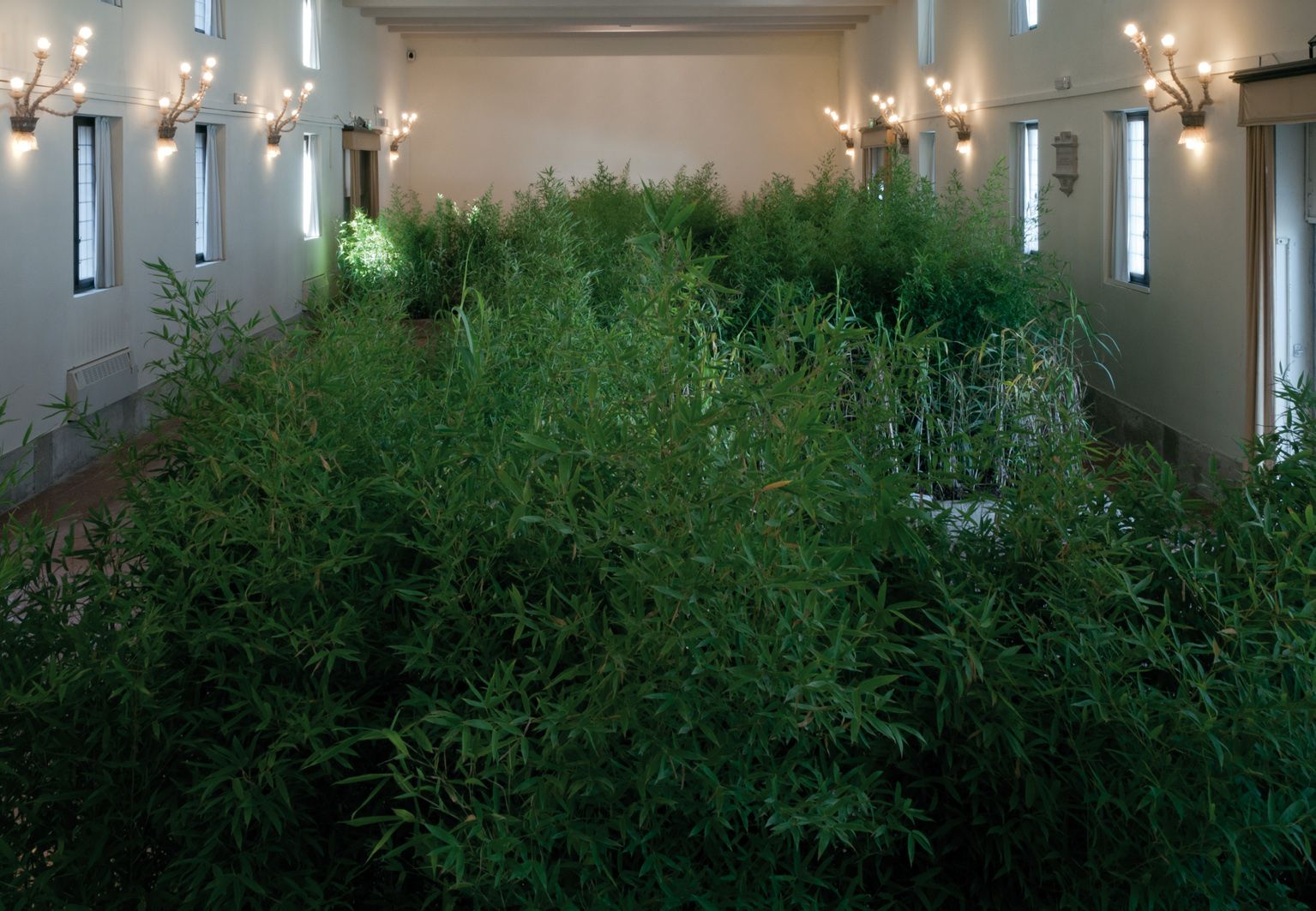
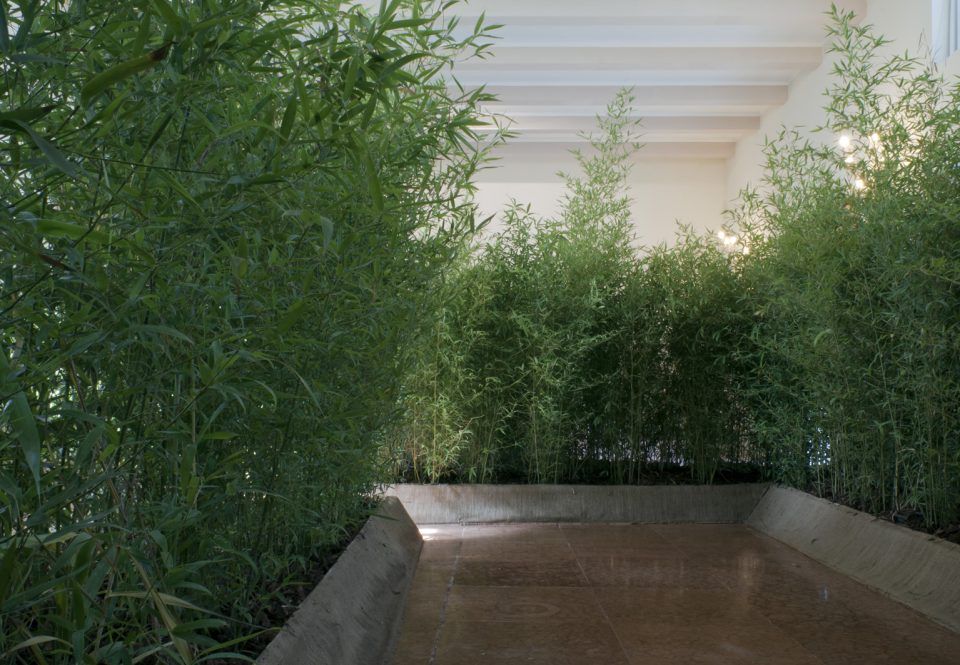
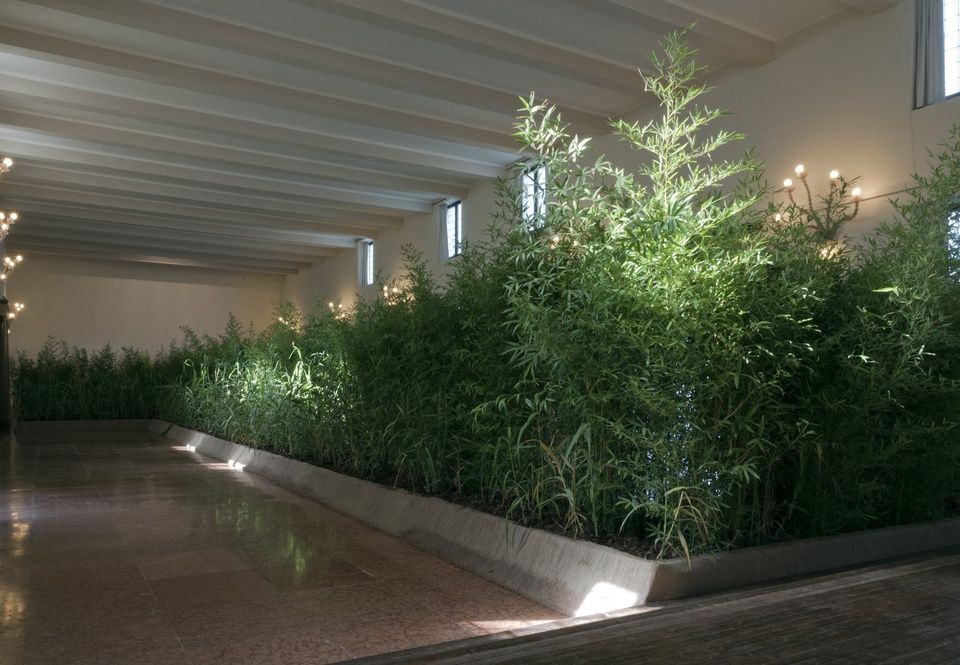
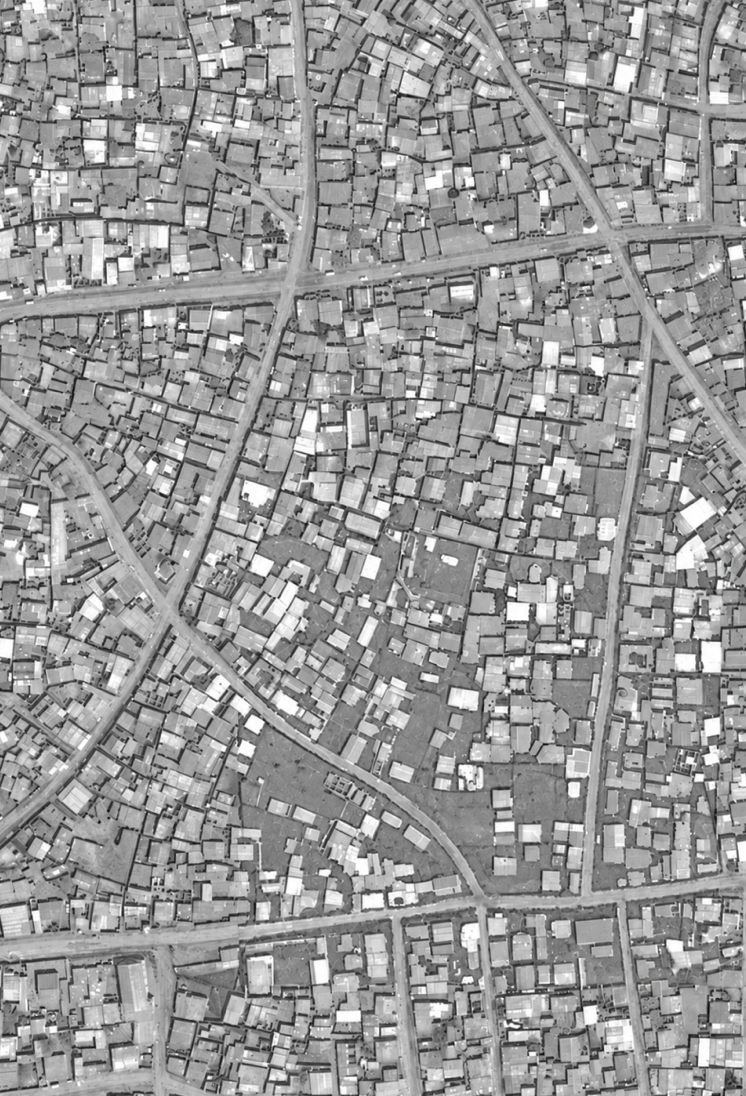
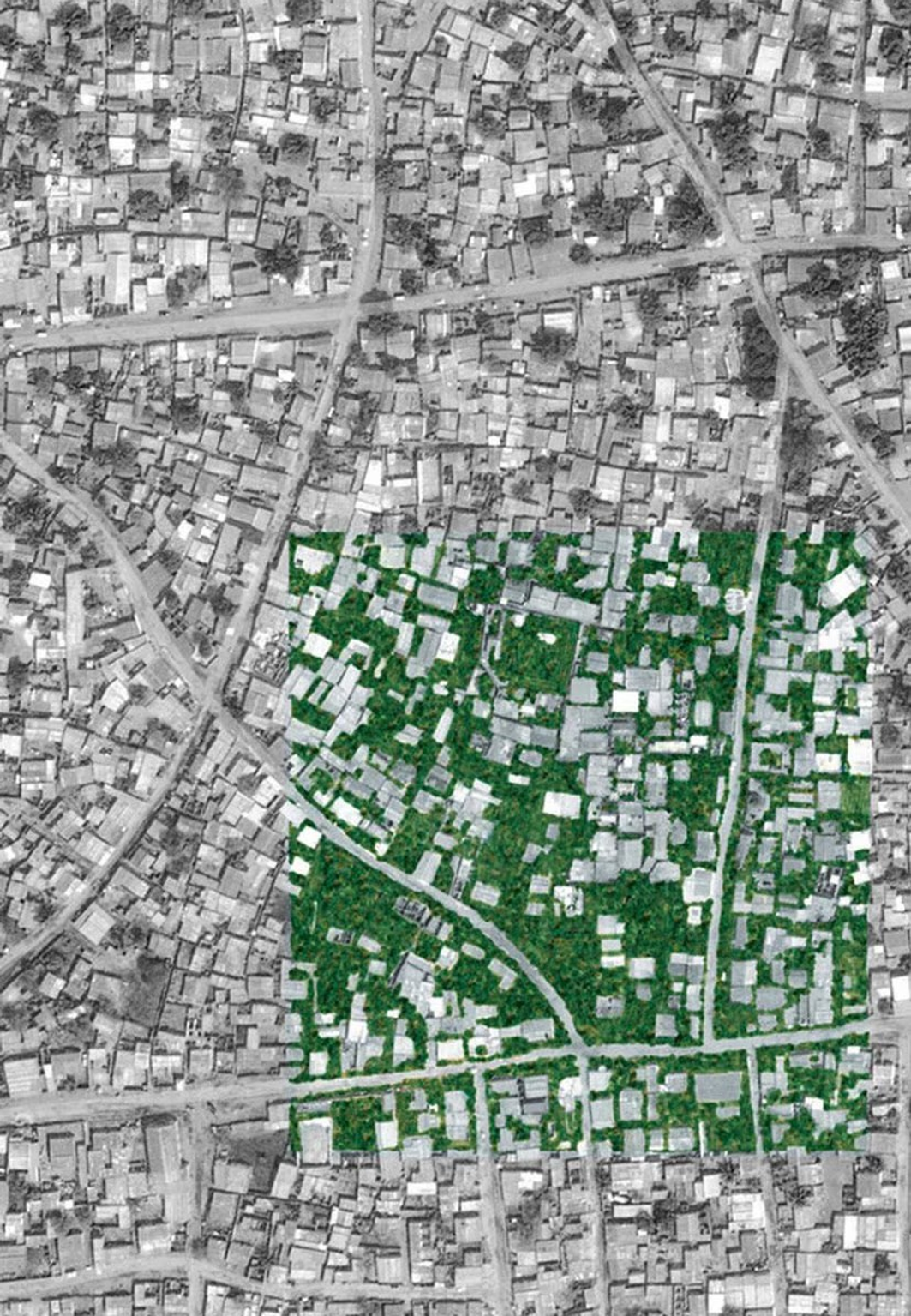
Beyond Entropy Angola, presented at the 13th Venice Architecture Biennale, proposed an urban strategy for Luanda’s musseques by filling interstitial spaces with Arundo donax, a fast-growing reed. The plant generates biomass energy, cools microclimates, and filters polluted water, transforming voids into infrastructural commons and civic space.
Luanda Encyclopedic City
Luanda is the research site for this project, which continues the curatorial approach B/E outlined at the 13th International Architecture Exhibition. The complexity of a city such as Luanda stems from unpredictable spaces and the coexistence of irreconcilable programmes: city and countryside, infrastructure and housing, rubbish dumps and public spaces.
Luanda is an encyclopaedic city. How can one organise one’s understanding of a city through the taxonomy of its spaces? At the heart of the pavilion is a reflection on how images shape the way the city is experienced.
Edson Chagas’s series Found Not Taken focuses on the systematic cataloguing of abandoned objects that are repositioned within an urban context, creating new relationships between the objects and their context, form and its codification.
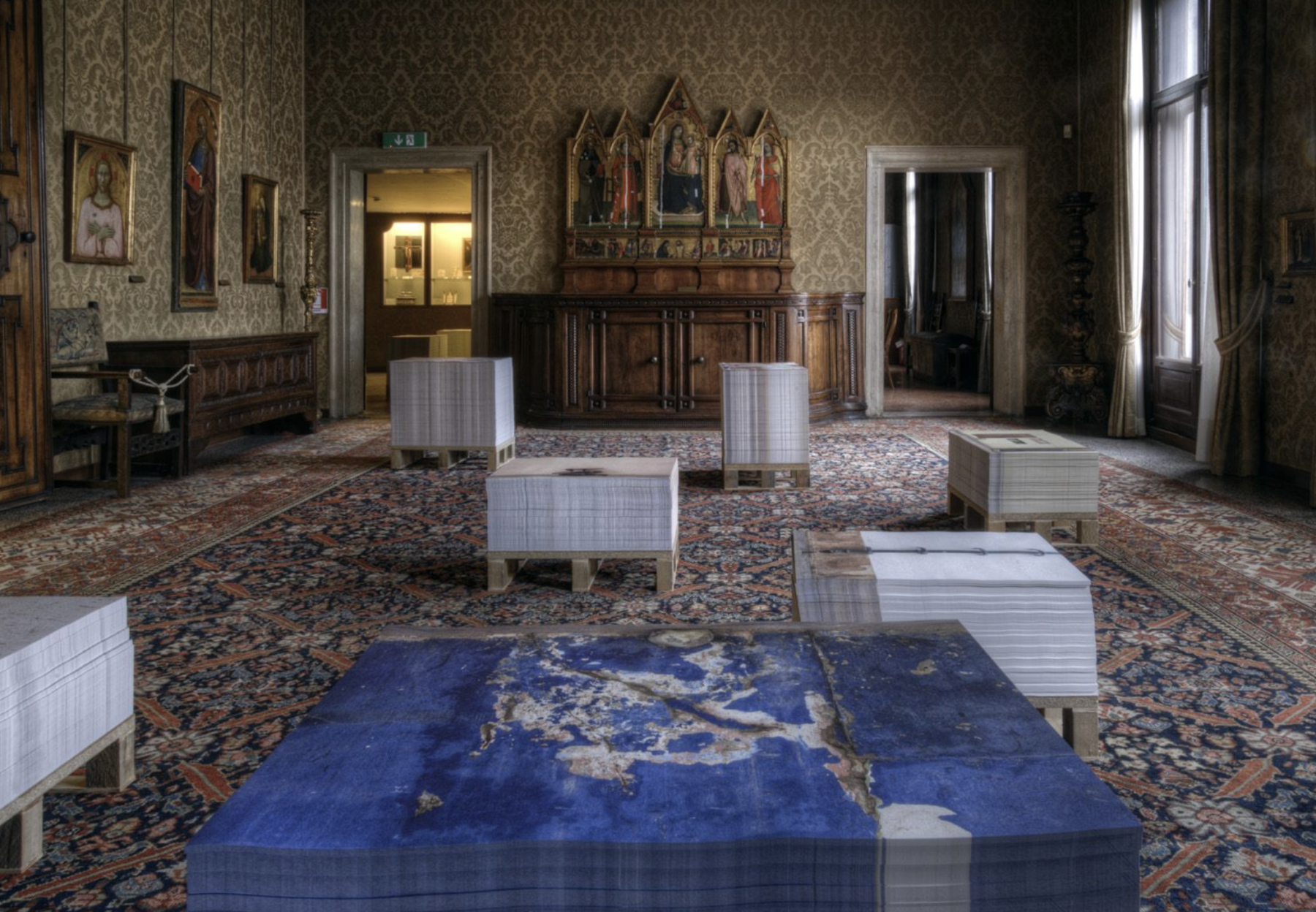
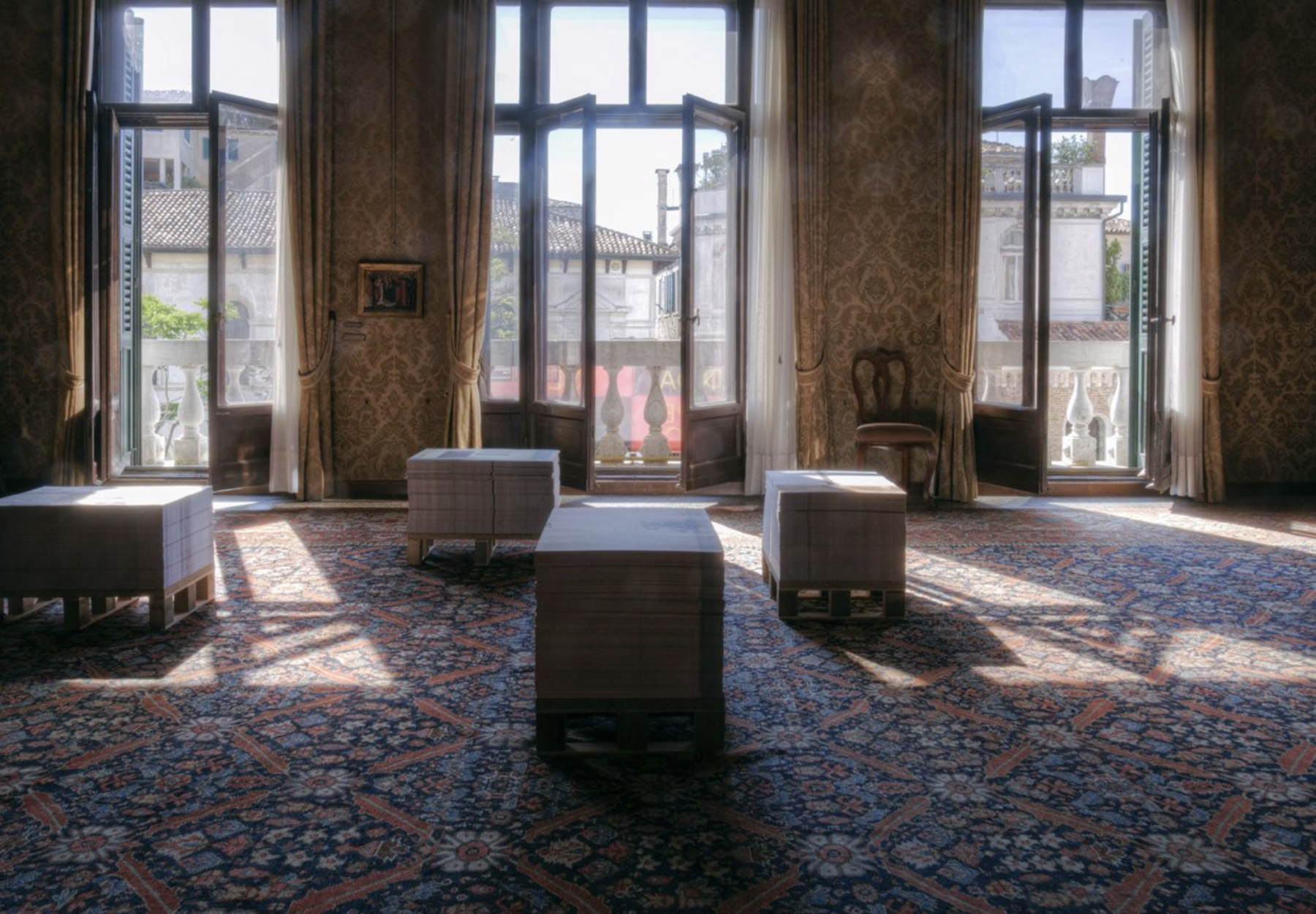
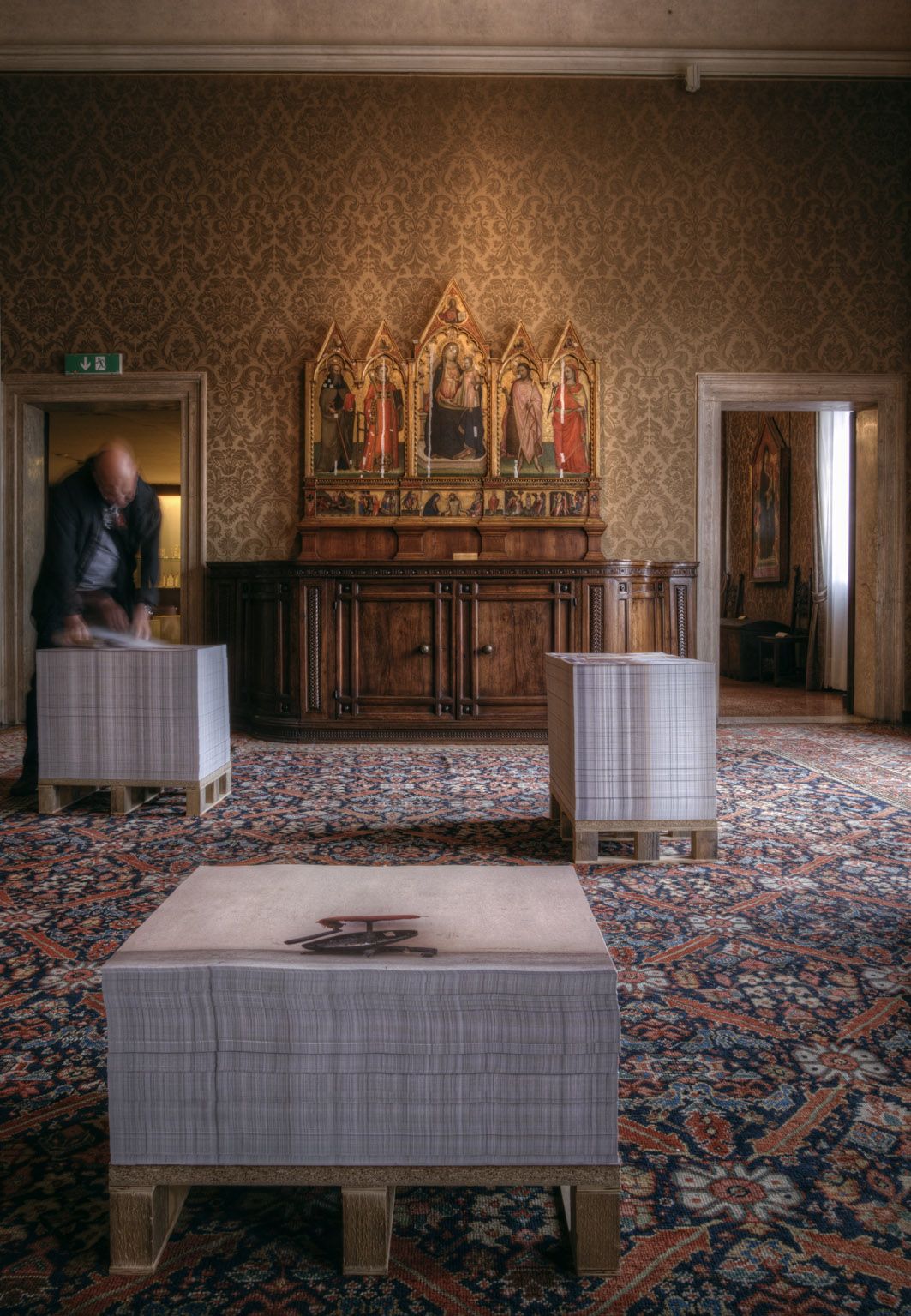
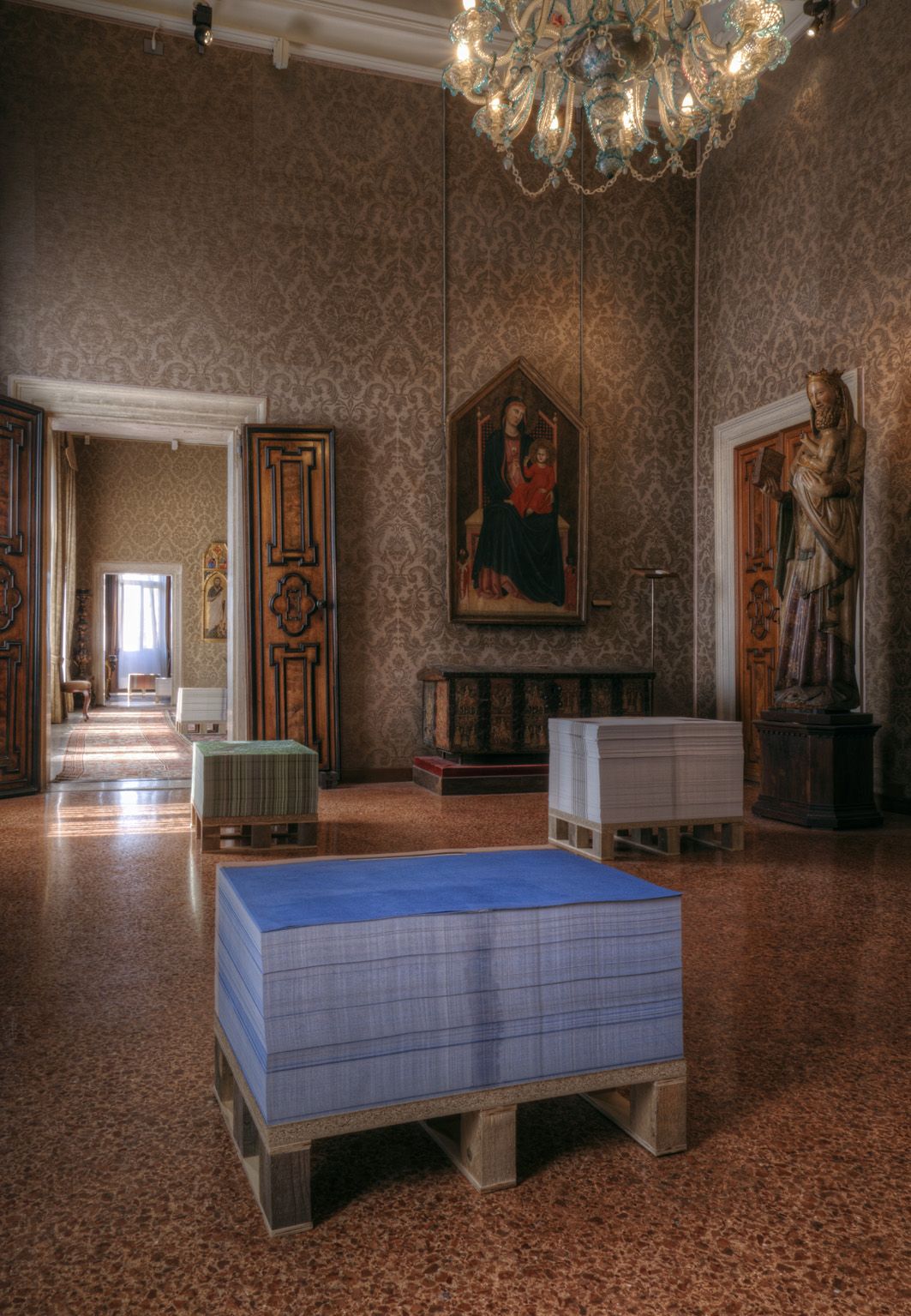
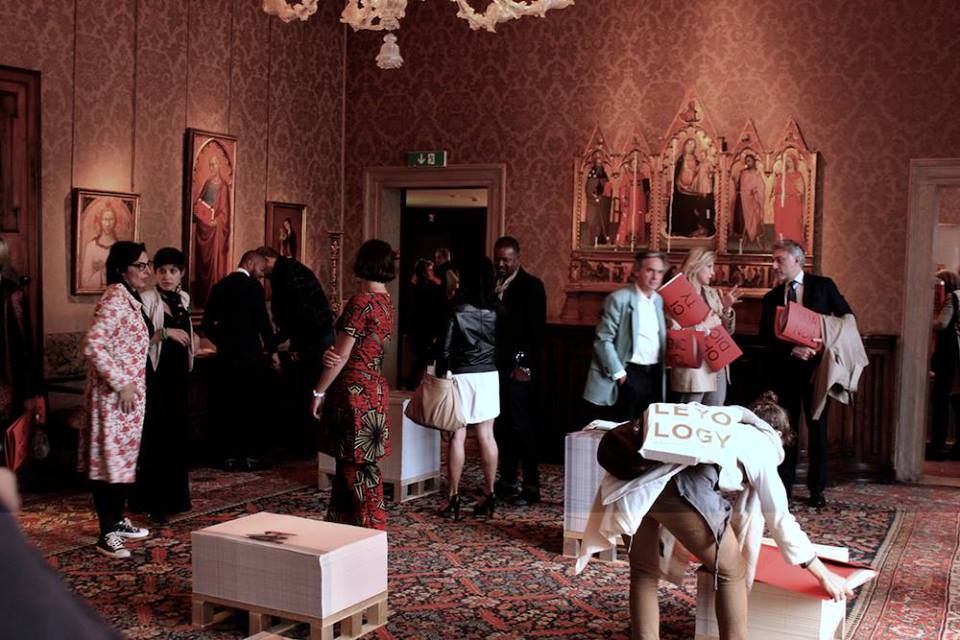
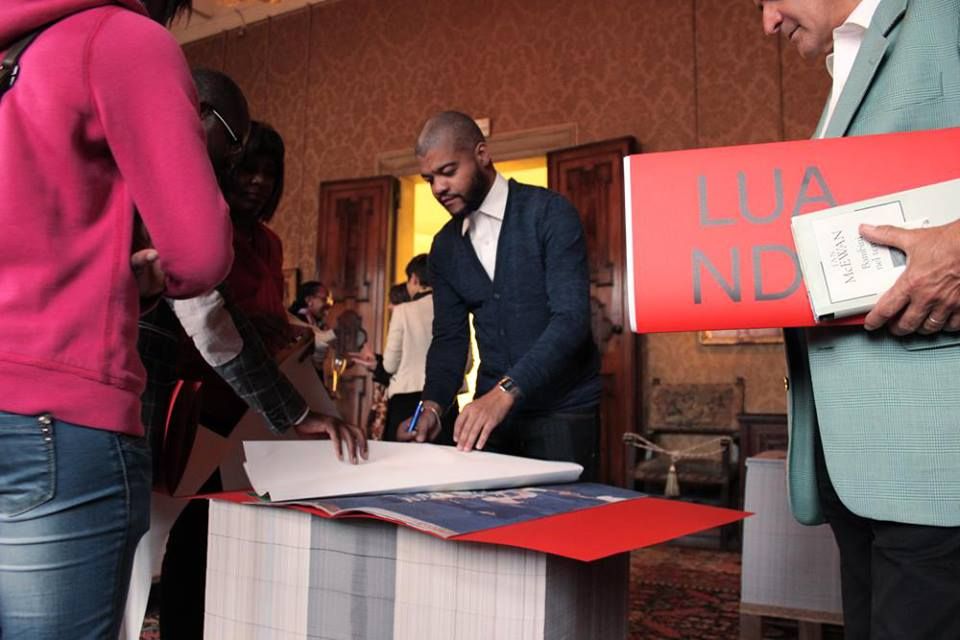
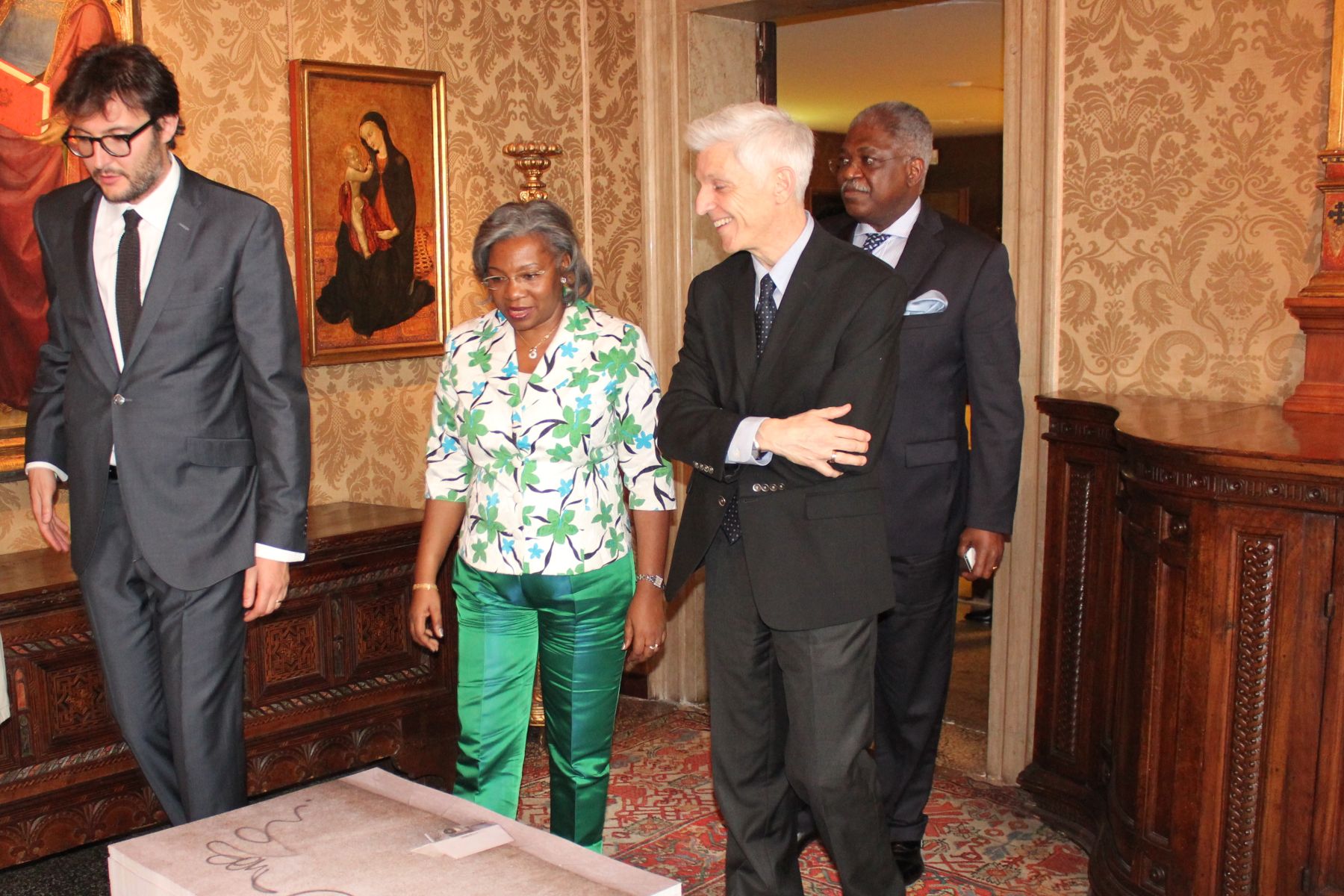
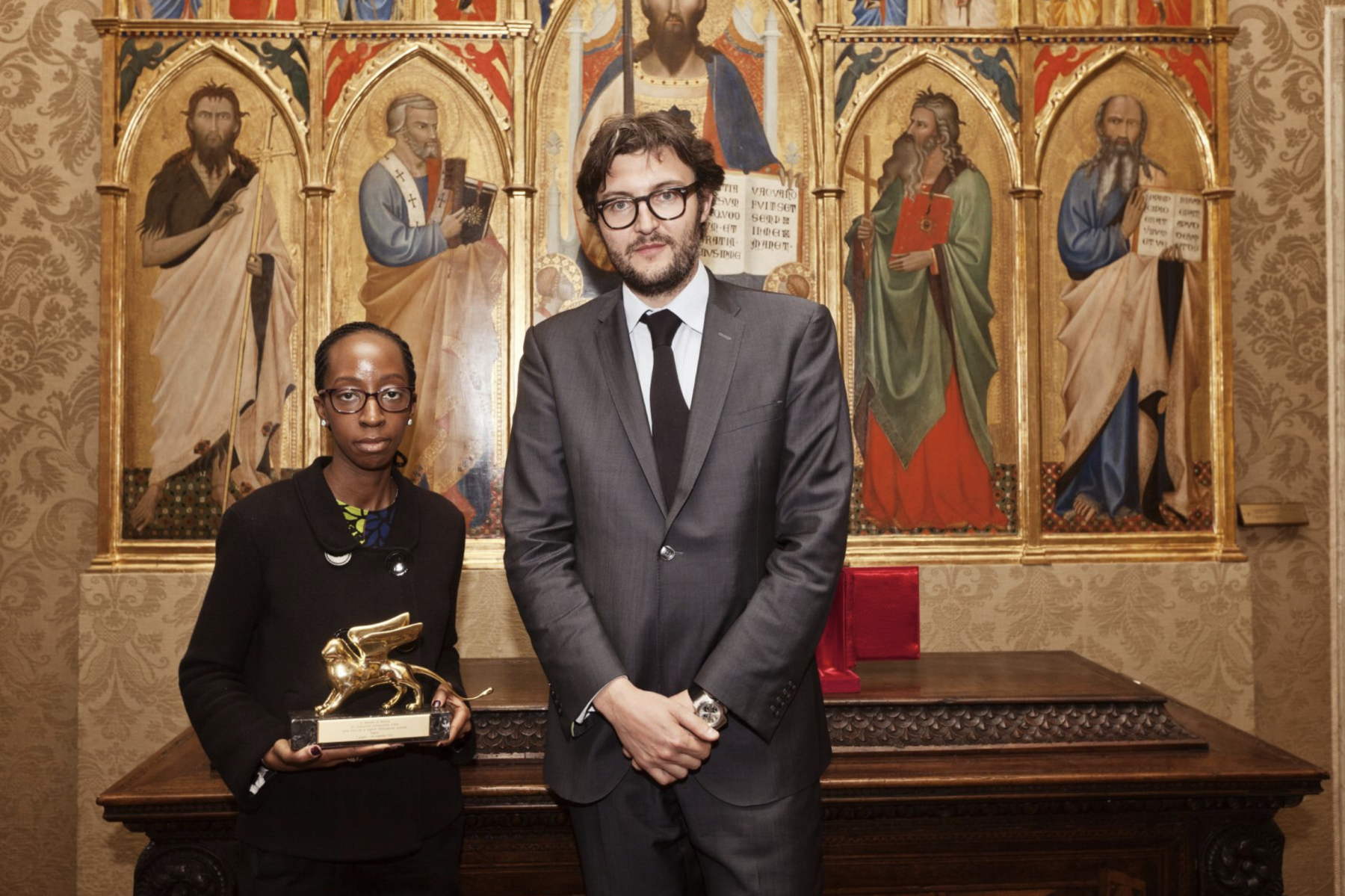
Presented at the Angola Pavilion of the 55th Venice Biennale International Art Exhibition in Luanda, Encyclopedic City featured twenty-three take-away posters from the series Found Not Taken (2009–2013) by Angolan artist Edson Chagas. Visitors could take the images with them, spreading Luanda throughout the streets of Venice. As the posters were removed, the rooms emptied, revealing a ‘new’ museum in Venice. The pavilion was awarded the Golden Lion for Best National Participation in 2013.
Ilha de Sao Jorge
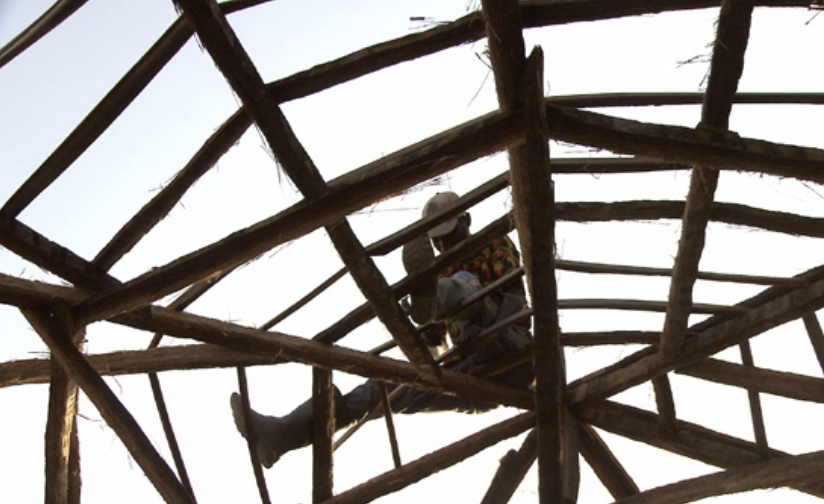
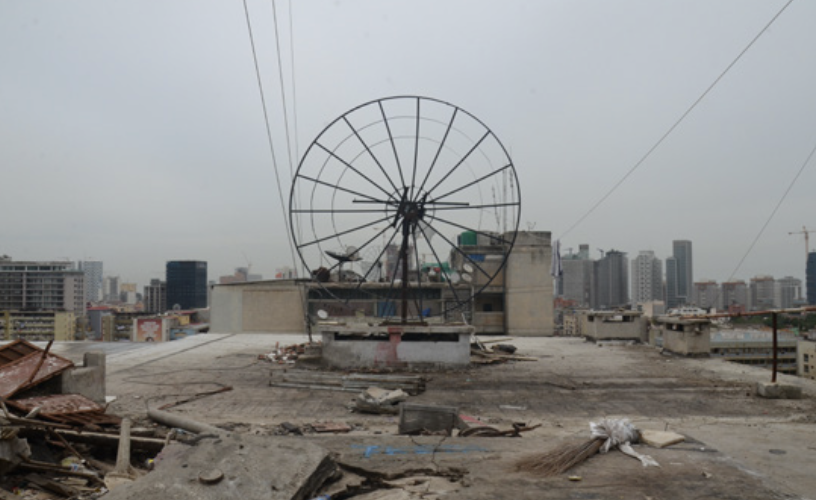
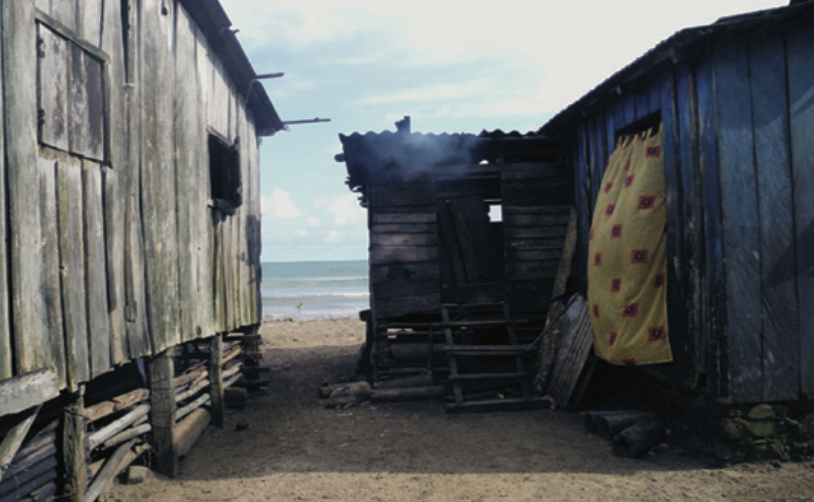
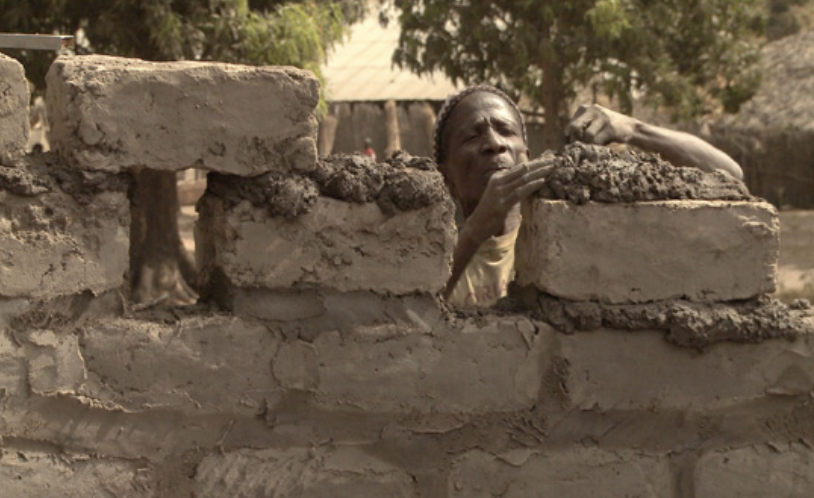
Ilha de São Jorge consists of 6 films made by 6 artists belonging to five countries: Angola, Mozambique, Cape Verde, São Tomé and Principe, Guinea Bissau and proposes a reflection on the way modernity was conceived, developed, built, dwelled, absorbed and sometimes rejected in these countries. The shared Postcolonial heritage makes it relevant to develop a coherent discourse on the similar ways these countries have declined or absorbed modernist architecture. Placing the architectural discourse together for the first time highlights their connections, often neglected, that contributed to the development of a modernist discourse. The book Ilha de São Jorge: Intrepid Visions complements the Project.
From Hands To Mind
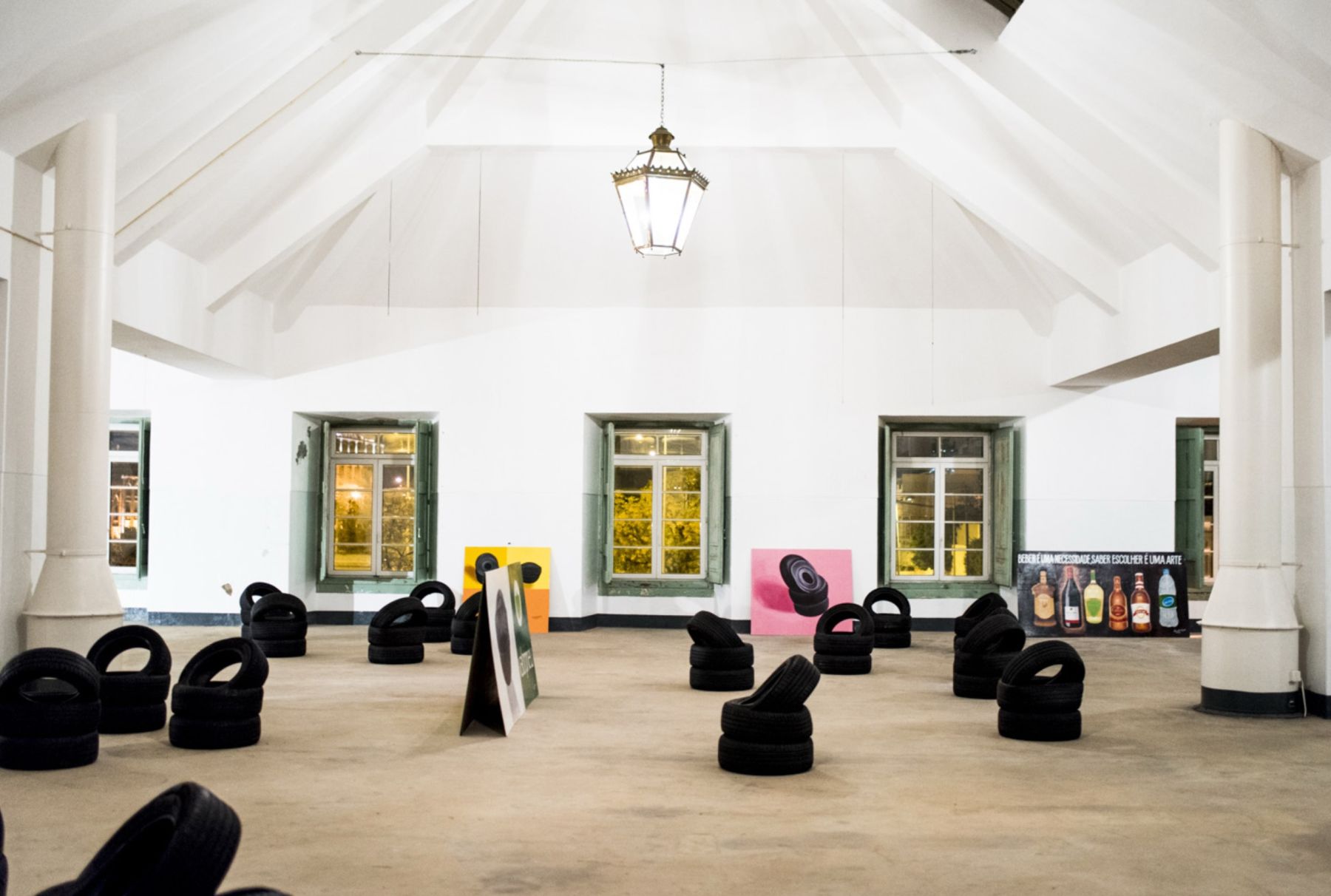
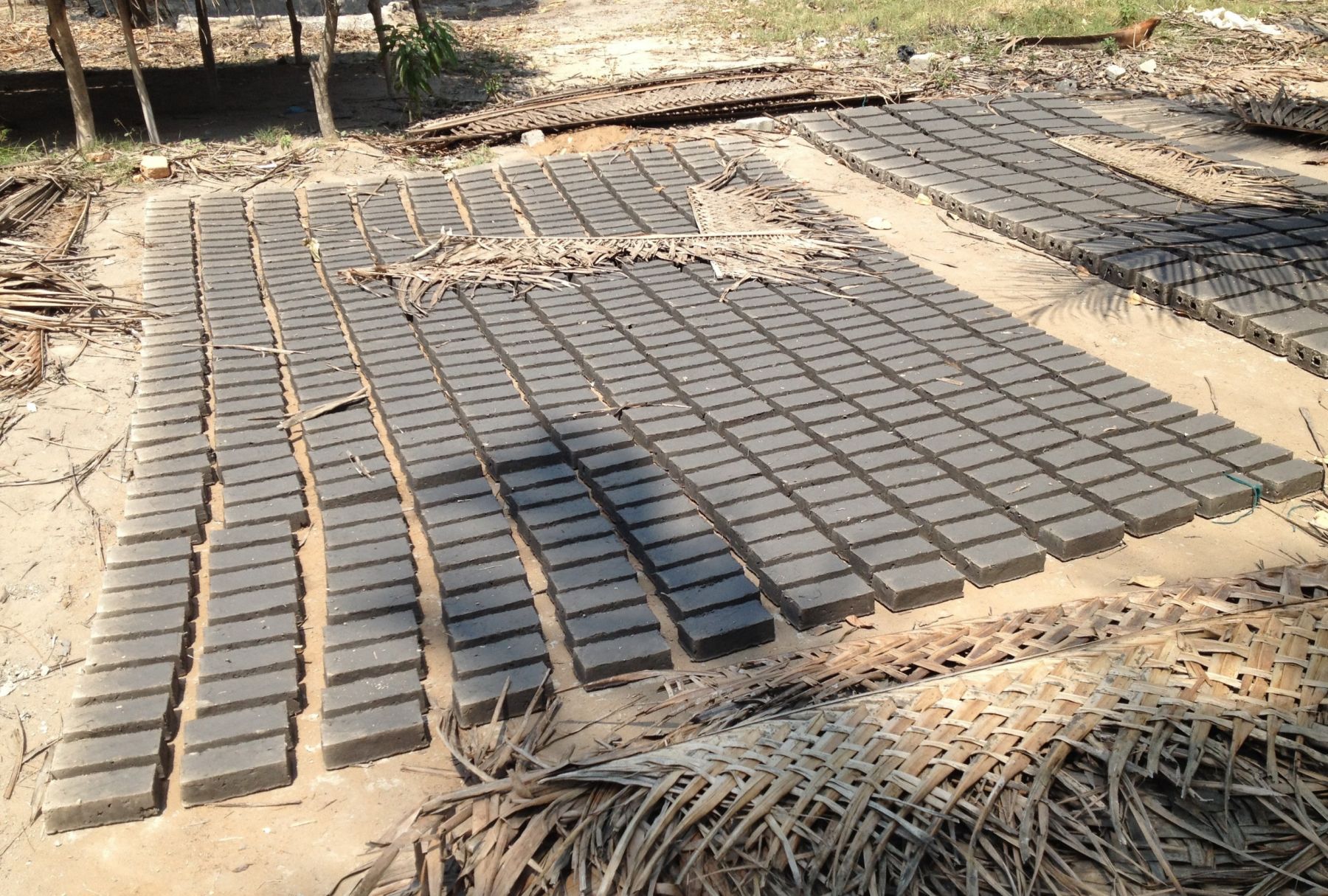
An exhibition presenting the results of a research project focusing on Portuguese-speaking African countries, exploring processes linked with project culture and local contemporary artisanal objects, departing from the central question: what is design in Africa?
Whilst there is a limited industrial apparatus in these contexts, the public buys products from abroad or cheap Chines commodities, and the professional figure of the designer is often associated with the artist or the artisan. Still, there is an extraordinary Design production, and this paradox is the space we explored. Instead of being a neutral aesthetic practice, design was/is a vehicle of the making of social norms (and unmaking of existing ways of being).
By focusing on four products that embody this specific mindset, the exhibition From Hands to Mind reveals how designers from São Tomé and Príncipe, Angola and Mozambique subvert the usual Design methods by adopting a bottom-up approach based on a handy, physical process of appropriation of given objects: by manipulating, repeating and slight adapting found objects, they question our conceptual approach and enlarge the very domain of what we consider Design.
Mangiabarche Gallery
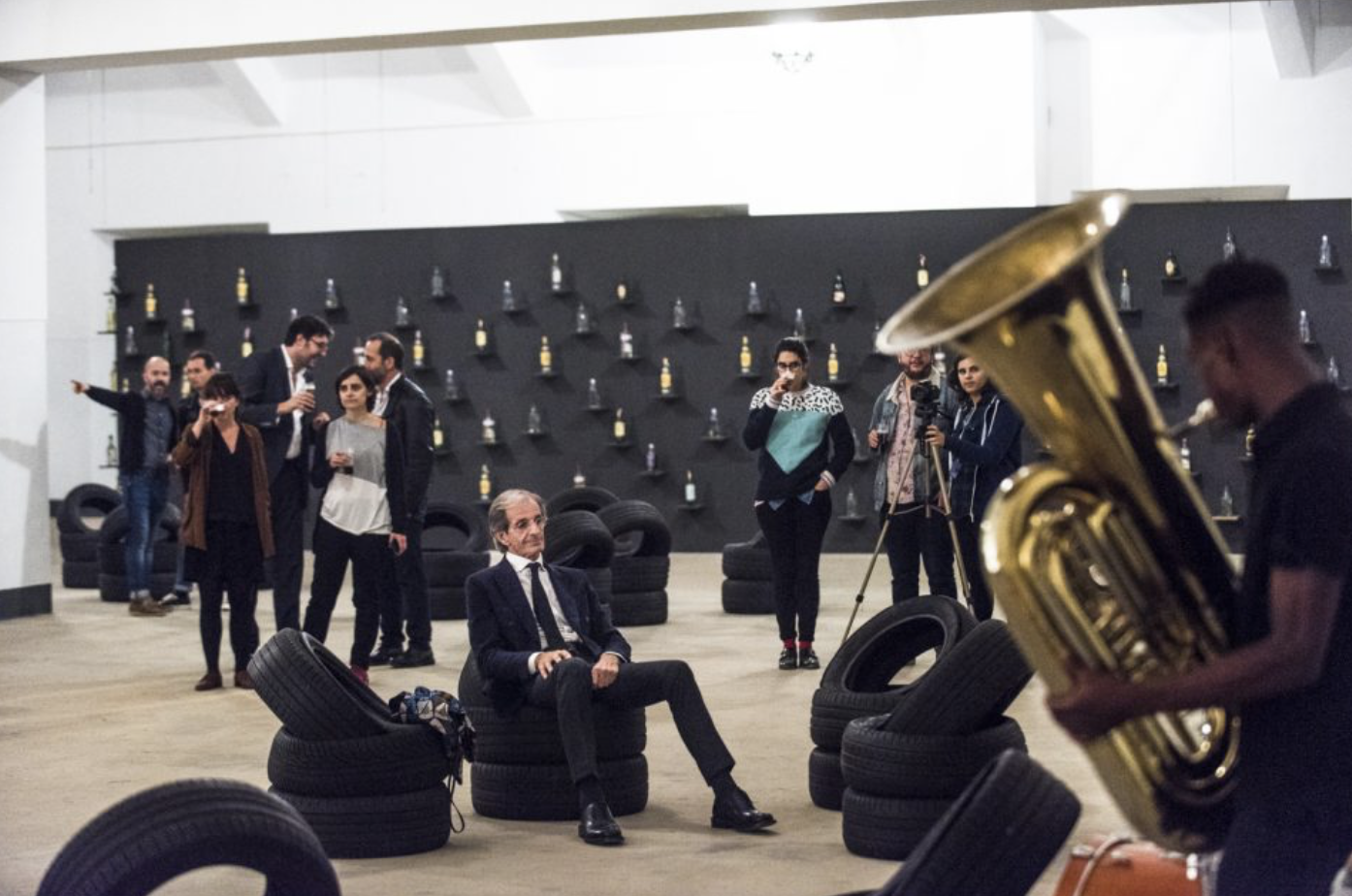
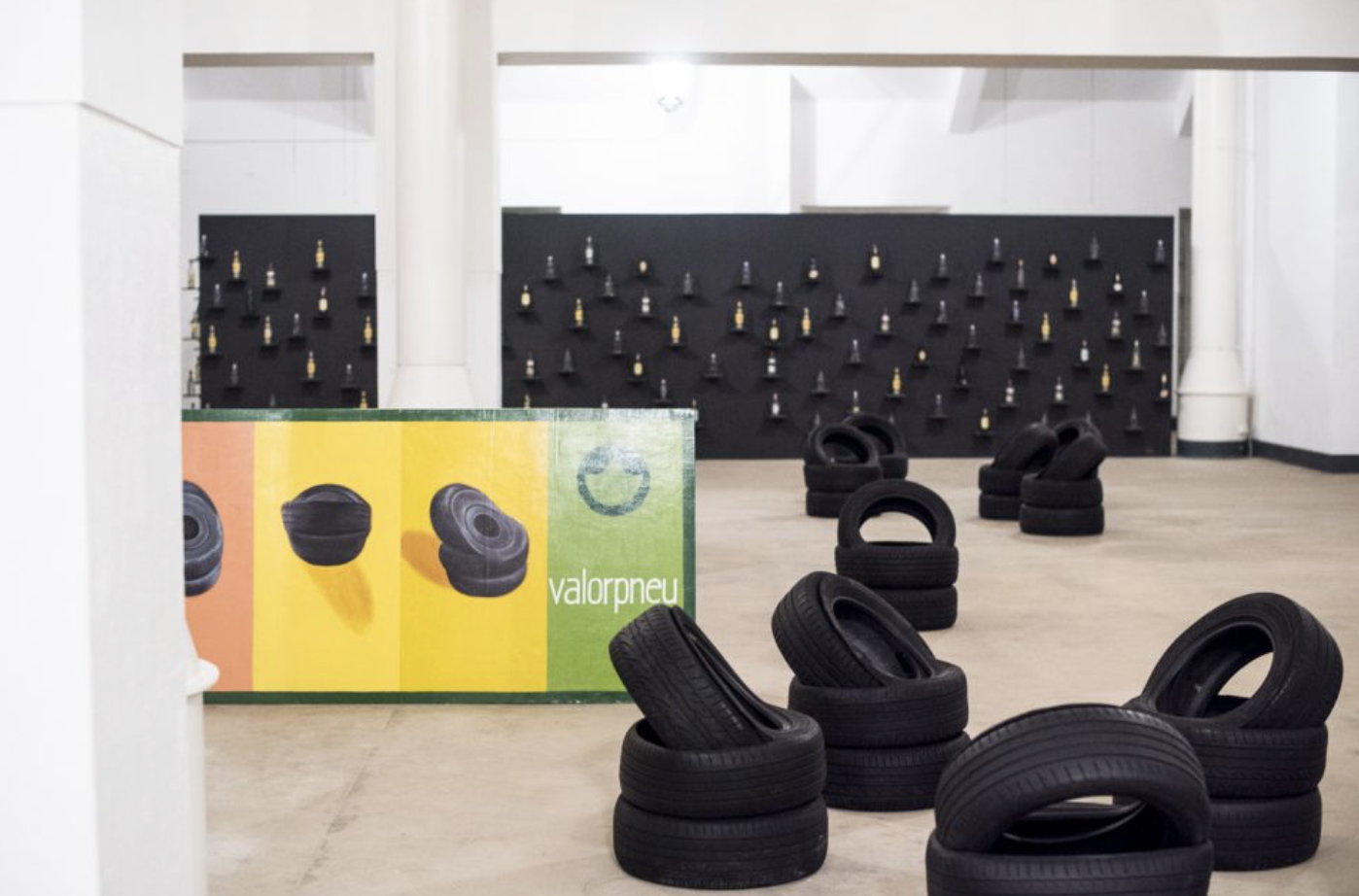
In Sardinia, Beyond Entropy Mediterranean investigated the coastline as a territory suspended between preservation and exploitation, occupation and abandonment. Projects including Mangiabarche Gallery and Mediter-radio began to formulate the idea of a dispersed Mediterranean Kunsthalle: an institution defined not by a single architectural object but by a constellation of places distributed across a territory.
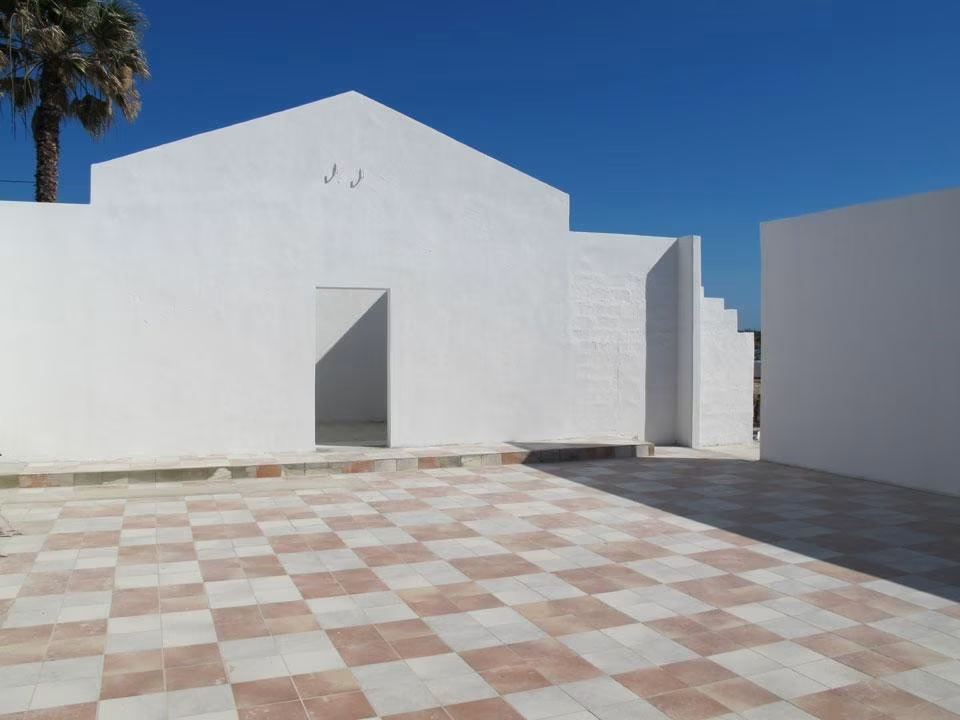
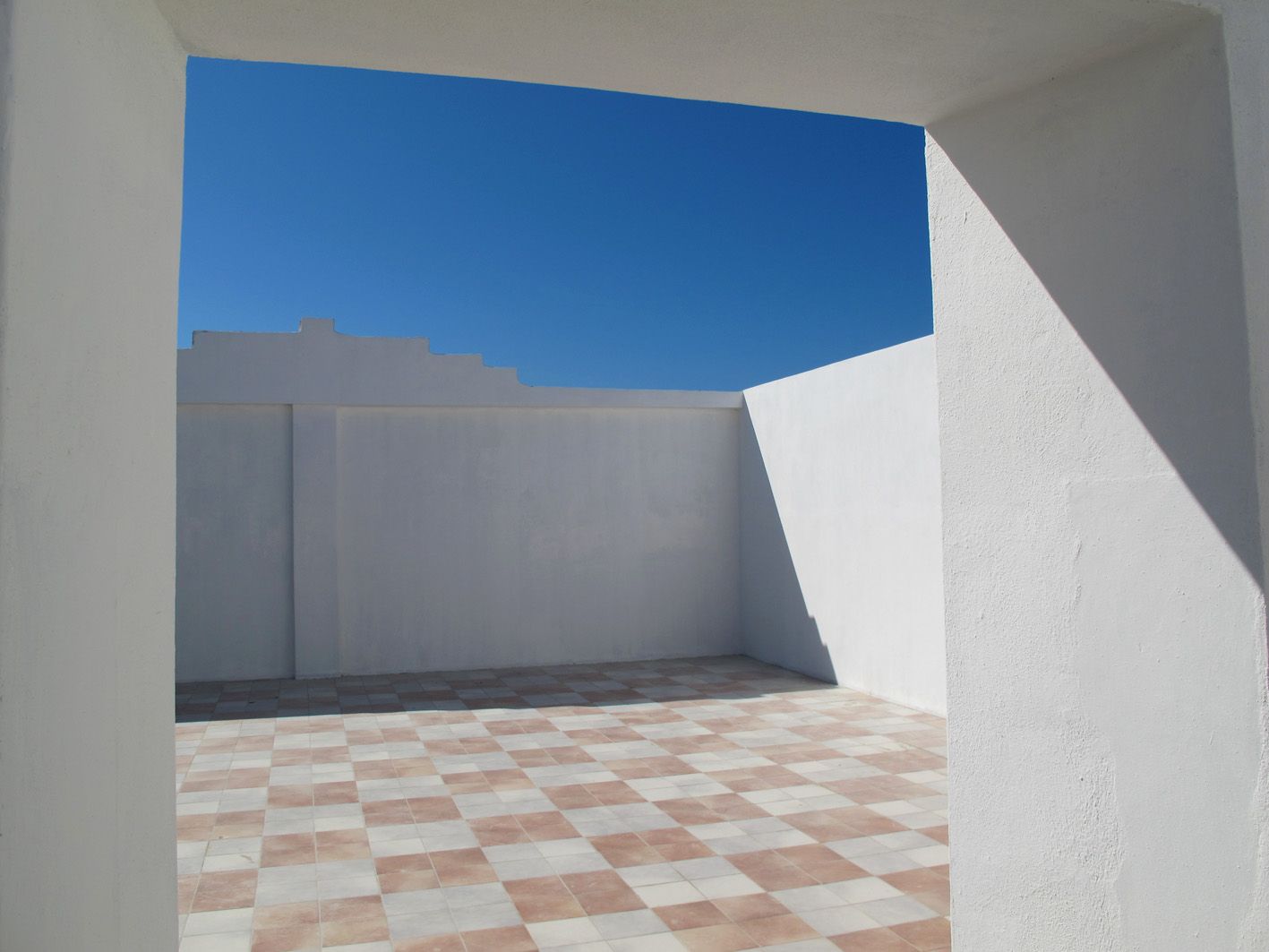
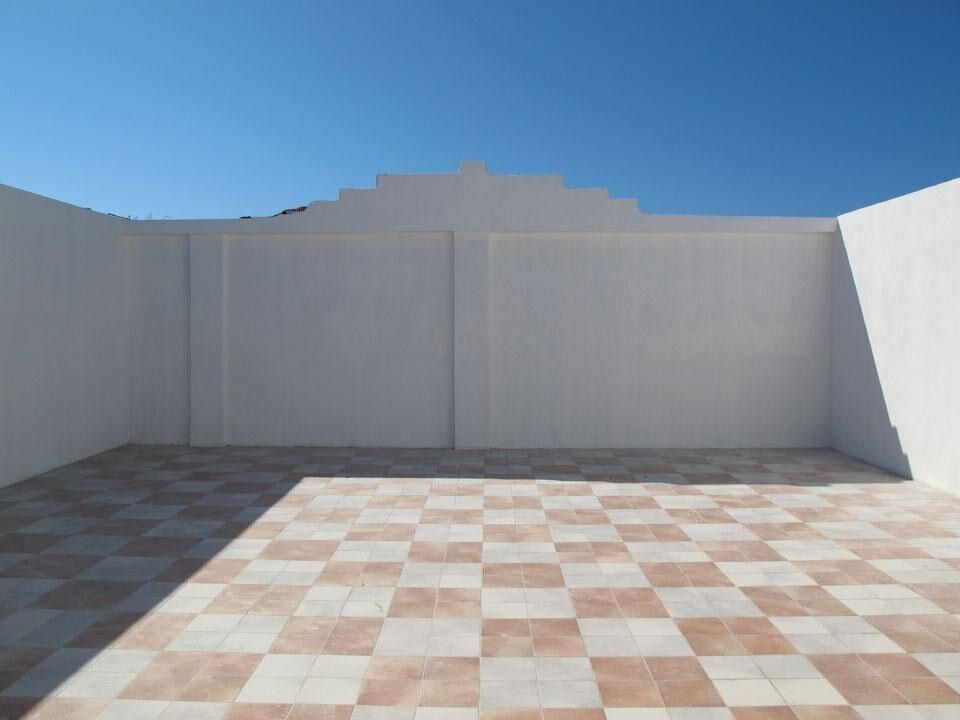
Conceived by Stefano Rabolli Pansera as part of Beyond Entropy Mediterranean, Mangiabarche Gallery occupies a former military building on the Sardinian coast, in Calasetta. Inspired by the Legge Salvacoste, the regional legislation protecting Sardinia’s coastline from new construction, the project proposes a radical inversion: rather than adding new volumes, architecture operates through subtraction.
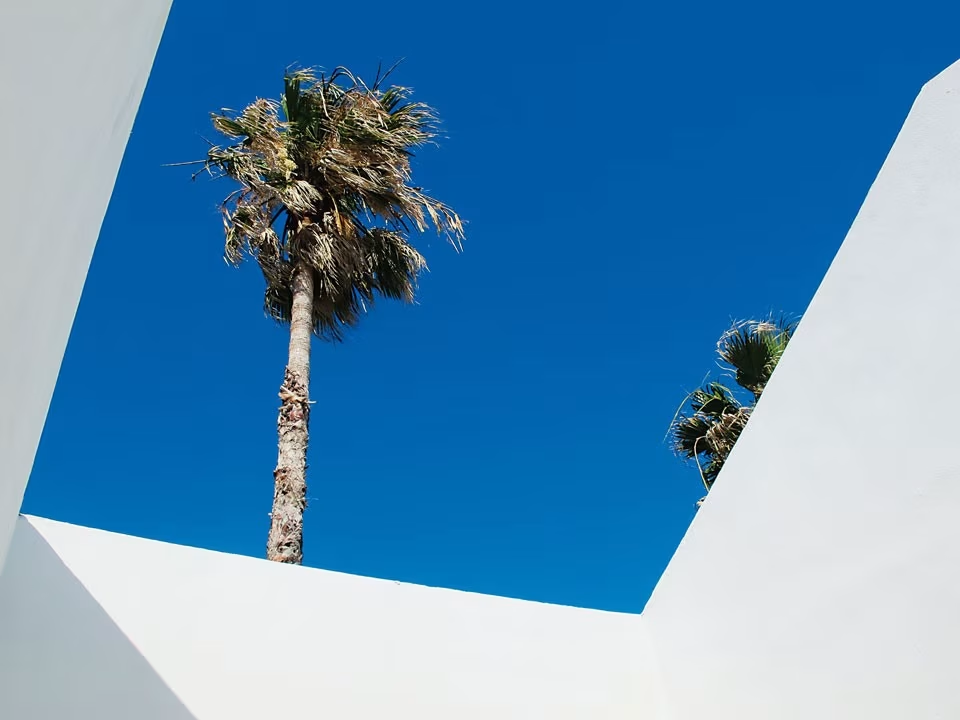
By removing the building’s roof, Mangiabarche loses its enclosure and gains a horizon. This architectural gesture is simultaneously a curatorial proposition: a space exposed to the elements and a programme open to transformation. Wind, rain, sunlight and time become active agents in artistic production. Rather than replacing one another, interventions accumulate, overlap and deteriorate, allowing each new work to engage with the traces of its predecessors.
Mangiabarche proposes architecture as subtraction and curating as accumulation. Its missing roof establishes the conditions for unpredictable events, while successive interventions challenge the conventional temporality of exhibitions. Architecture becomes not a permanent container for finished objects, but an evolving situation in which artistic intentions, material transformations and natural processes collectively produce space.
Mediter-Radio
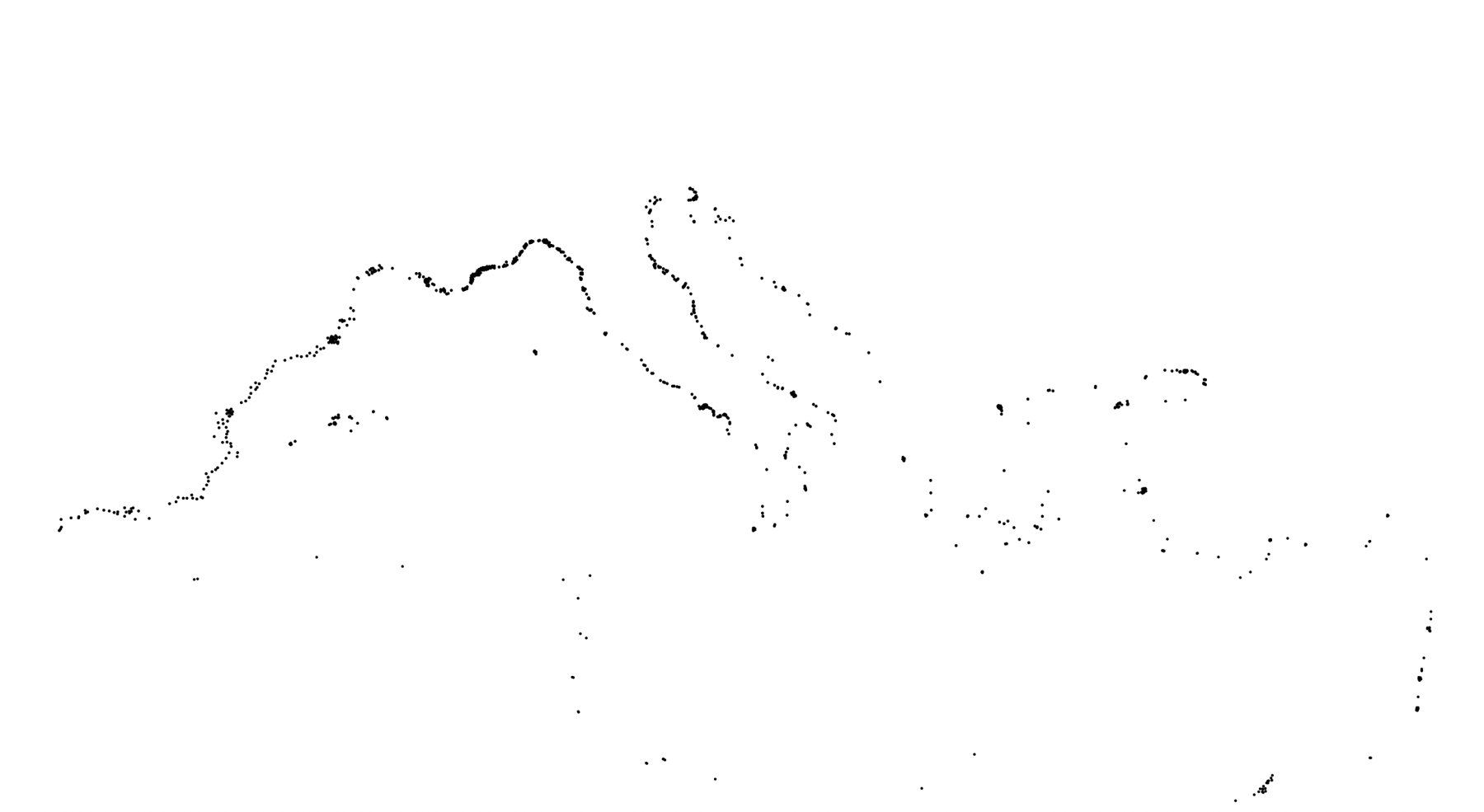
Mediter/radio is a geopolitical project unfolding through web radio. Its immaterial medium maps 1,037 Mediterranean coastal museums and cultural spaces as epicenters of listening and broadcasting. The sea shifts from closed basin to archipelago, a constellation that reframes the Mediterranean as an evolving geopolitical entity—open to listening, narration, and critique.
Il Quarto Stato
Beyond Entropy Europe investigated the diffuse urbanisation of the European territory through projects including Il Quarto Stato, addressing conditions in which the traditional opposition between city and countryside had become increasingly difficult to sustain. Potential Monuments of Unrealised Futures, curated with Jonida Turani, extended this investigation into the political and imaginary dimension of territory, understood not only through what had been built, but also through the unrealised, abandoned and imagined futures that continued to operate within the present.
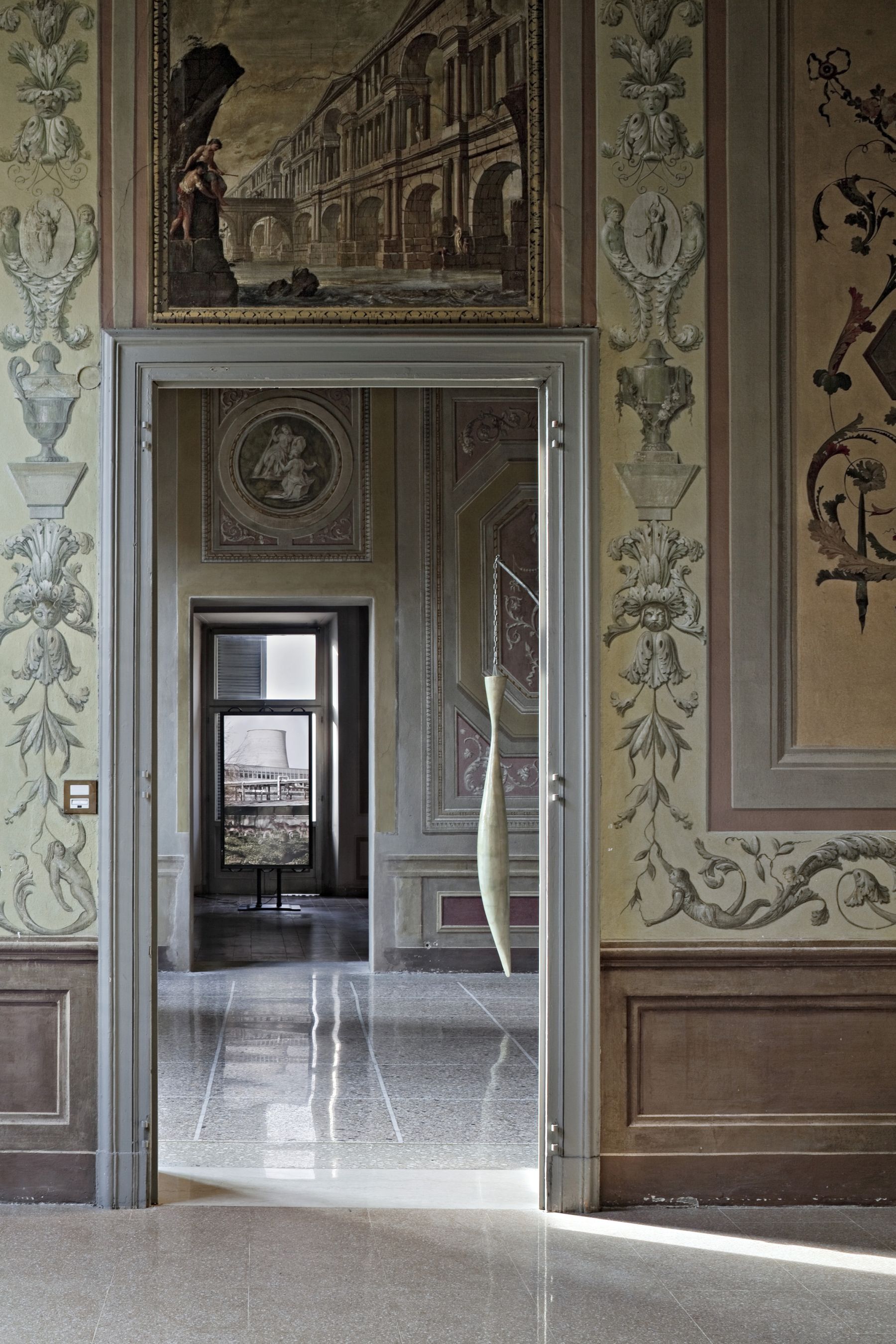
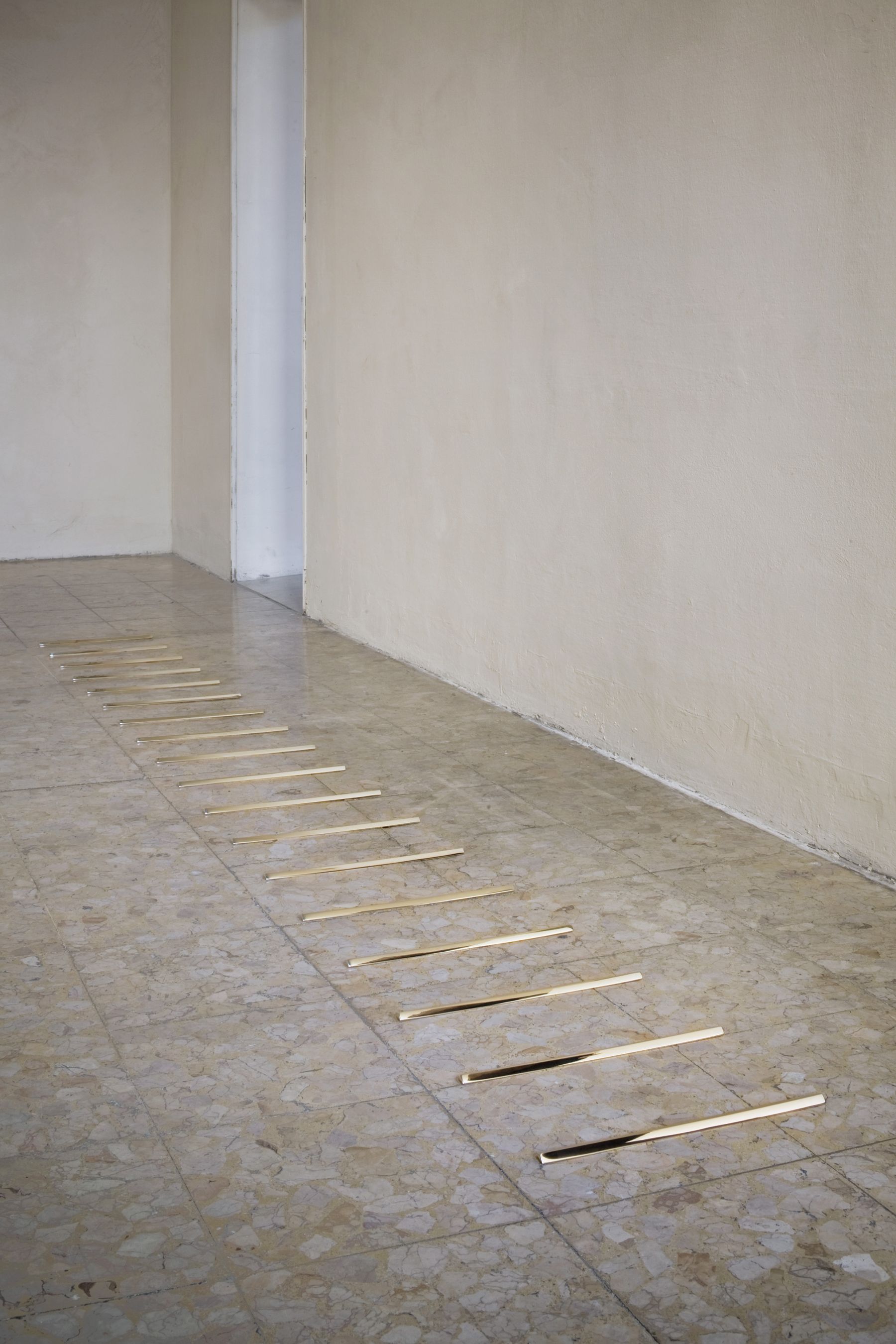
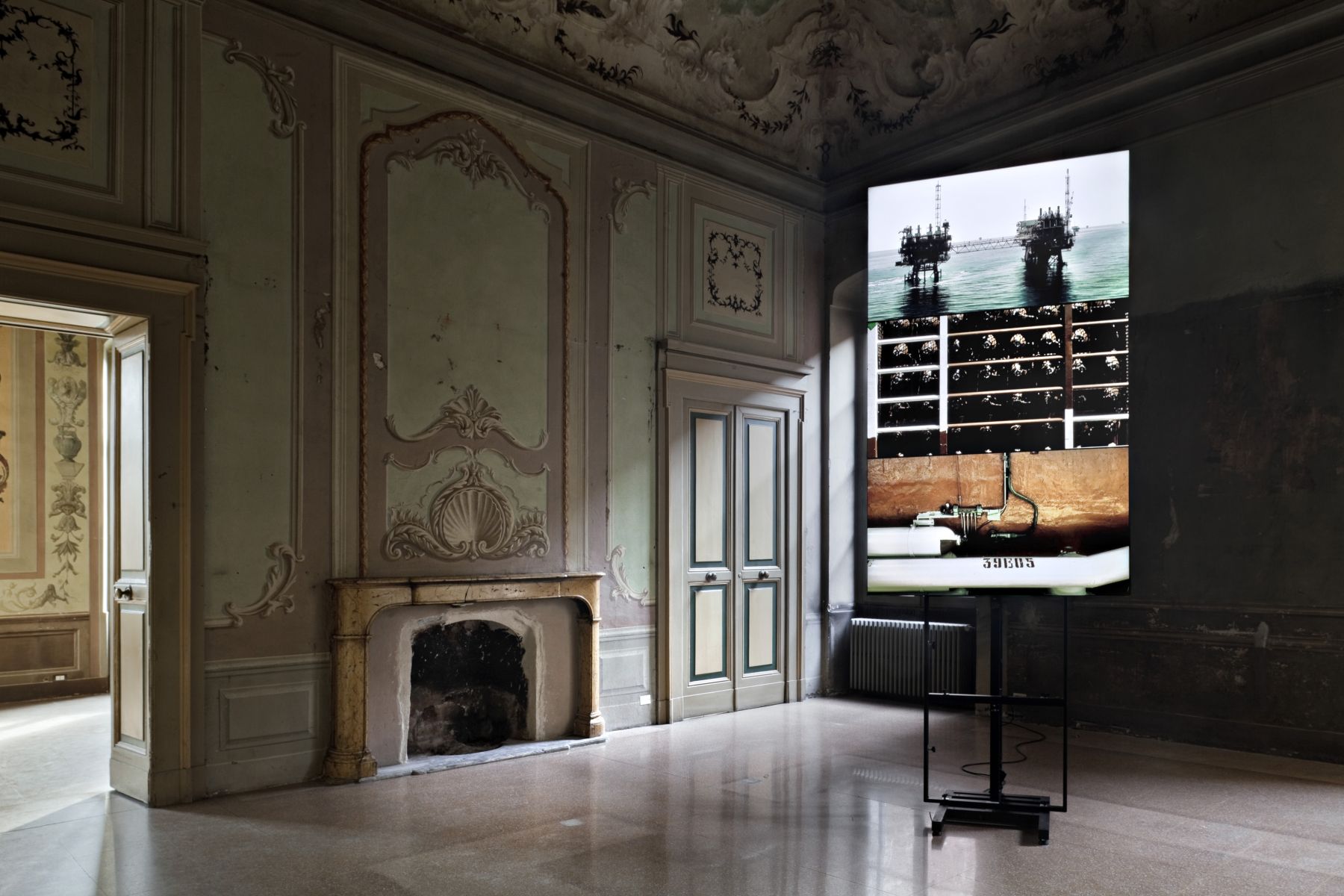
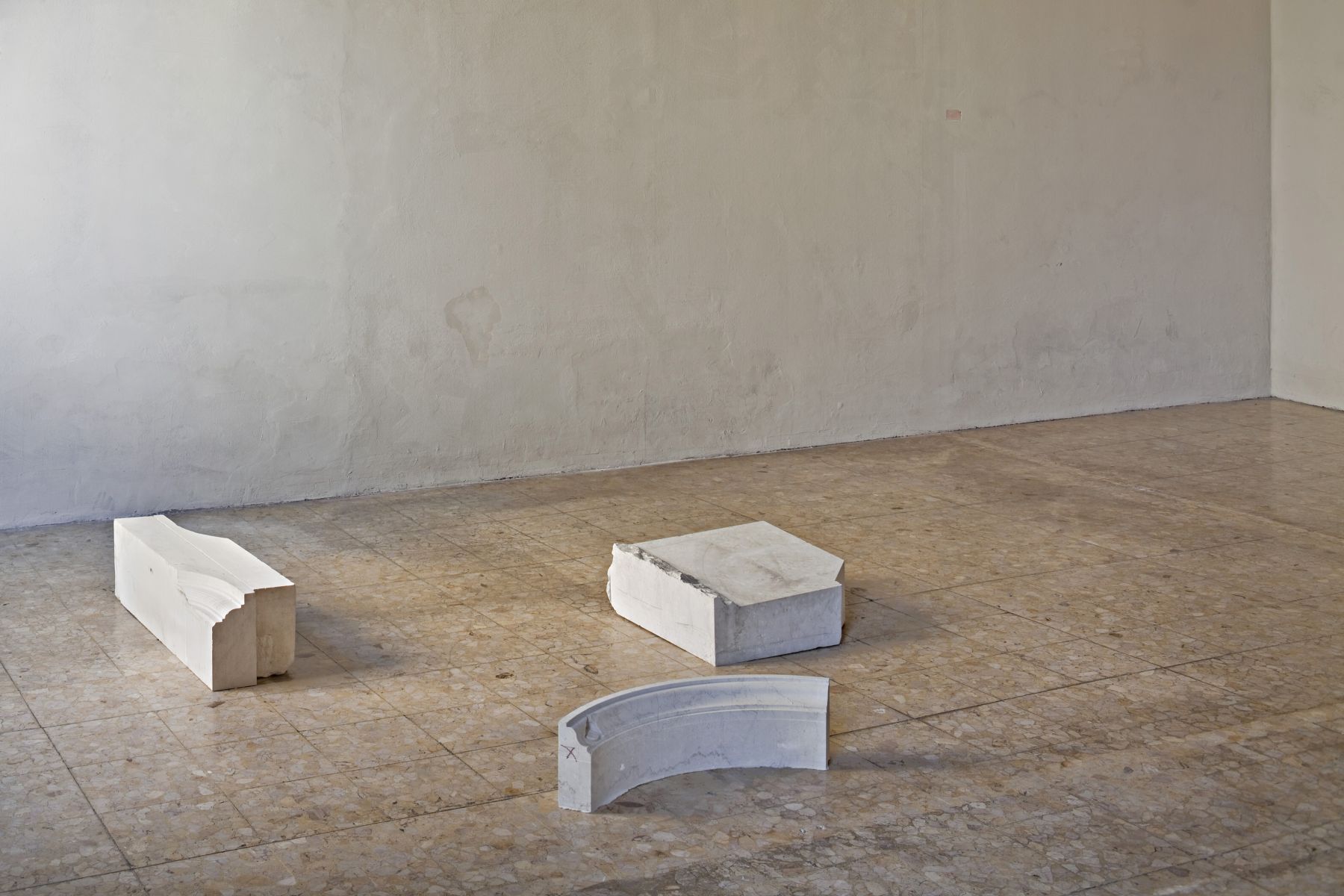
Kunsthalle Brixiae positions Northern Italy as a paradigm of Europe’s diffuse urbanization. The inaugural exhibition Il Quarto Stato—with works by Yuri Ancarani, Madoka Furuhashi, and Michael Sailstorfer—interrogates labor, production, and capital, reframing work as an energetic force that reconfigures entropic landscapes and inaugurates new modes of inhabitation.
Potential Monuments of Unrealised Futures
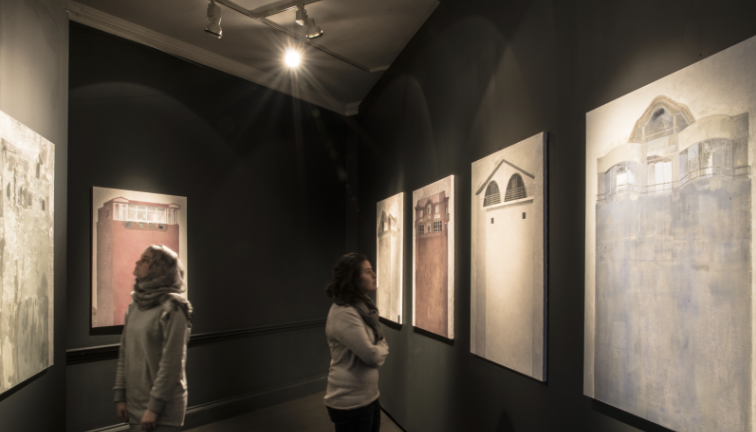
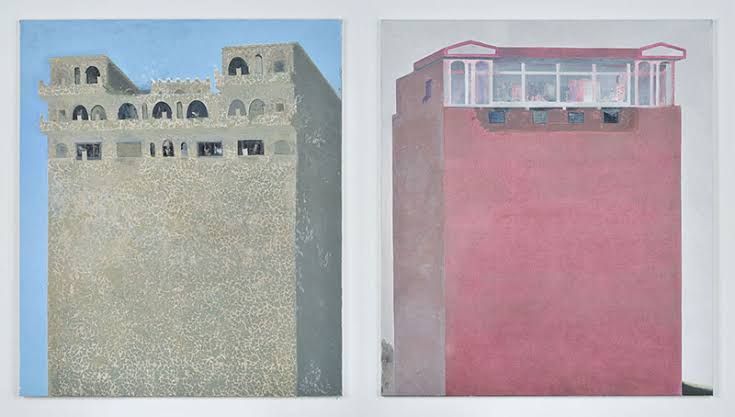
Aligned with Fundamentals—Absorbing Modernity 1914–2014, Potential Monuments of Unrealised Futures reinterprets Albania’s interrupted architectural trajectories through the artworks of Edi Hila and Adrian Paci. Privileging potentiality, it reads unfinished forms as resources for renewed monumentality and for inhabiting Tirana’s unstable urban field.